Friday, September 07, 2007

College, Hollywood-style (pre-1950s)


As I was driving to work the other day, I started thinking about how professors' jobs and campus life generally were depicted in old Hollywood movies. Of course, there are more recent depictions: what about Ross from Friends, who held down a tenured position at NYU while having oodles of time to hang out at the coffee shop and got articles published without ever spending five minutes in writing them? The old ones, though, seemed to have a set of rules.

  1. College professors are poor, if by poor you mean having a beautiful old Victorian mansion and a maid. See The Male Animal for an example of this. Of course, in 1940s and 1950s movies, characters often yearn to get rid of that spacious Victorian heap with its 10' ceilings and move into a 3-bedroom split-level in the suburbs. In these movies, expect to hear a lot of talk about poor faculty salaries, even as the maid serves tea, and expect to think to yourself, "I wish I were poor like that."
  2. Football and other sports are the raison d'etre for a college. See Father Was a Fullback, etc. Sometimes pesky professors try to interfere with the big game by insisting that students do a little thing like pass an exam even in the face of the administration's and the trustees' insistence that beating State is much more important. Even the staid Mr. Belvedere gets into the act in Mr. Belvedere Goes to College, setting a high-jump record after he teaches sorority girls to behave like ladies. Night into Morning is the most realistic picture of all these. In that movie, Ray Milland is an English professor who actually spends some time grading blue books in between bouts of handling his personal life. He agonizes about giving an oral exam to a failing student who's needed for the big game but finally does so.
  3. There is a place for women on campus. Indeed there is, and a woman on campus is there mainly to provide a disturbing element: distracting the quarterback of the football team (Campus Confessions), or, if she's older, to be a Wise Dean or an Easily Shocked Spinster Librarian (and yes, I know this is a stereotype, but these movies trade on stereotypes).
  4. Faculty-student romances are common, and a good thing, too. It's a sorry heroine who can't get her professor to marry her, and a lot of professors are single heartthrobs (Van Johnson in Mother is a Freshman, Fredric March in The Wild Party) just to make this possible.

  5. Administrators generally quiver like Jello at any hint of displeasure from the trustees. The Male Animal isn't as funny a movie as it thinks it is, especially in its mandatory drunk scenes, but there is a surprisingly effective plot thread: Henry Fonda insists on his right to read selections from the letters of Bartolomeo Vanzetti (of Sacco and Vanzetti) to his class even if he'll be fired as a communist sympathizer for doing so. Joan Crawford likewise stands up against censorship in Goodbye, My Fancy (pictured above), lambasting her former lover and weak-willed college president Robert Young with a few pithy quotations from Walt Whitman.
Have I missed any college cliches? Are there any new variations?
[Edited to add: Kiita has a good post on this with a lot more (and a lot more recent) films at chasing the red balloon: The thing to determine conclusively is whether you are in a comedy or a tragedy..]

Tuesday, September 04, 2007

Civil disobedience or passive aggression? You decide.

Someone who sends out the announcements for a related department always does so by attaching an enormous color .pdf poster and sending it with the message. No subject line. No text. You
a. open the message every time, wait patiently for the .pdf to unfold itself, fight off the "Update me now!" messages that happen EVERY time you open Acrobat, and think "Isn't it nice to know about this event."
b. delete the messages without reading them.

Monday, September 03, 2007

And that's why it is called Labor Day

. . . because that's the day when grad students start bombarding you with chapters, introductions, lists, and other things they've been working on all summer. I know how they feel: "There! That's off my desk now, and I can relax!" I also know how I feel: pleased that they've worked so hard, but a little . . . ambivalent about getting this stuff on the day that's an official day of rest. (I know: it's my fault for opening e-mail.)

. . . because the department chair is apparently having some really productive brainstorming sessions today about all the things we can do, meetings we can have, etc. this semester and is e-mailing us about them. Again: not her fault, but mine for opening the e-mail.

. . . because this is the day to wash, rinse, and wax (or non-wax, whatever the stuff is called) the floors in the house before the real beginning of the semester. I wonder if anyone else thinks this the whole way through such a process: "I'll bet that Famous Critic X never has to wash the floors."

. . . because the letters I didn't get written on Friday didn't write themselves over the weekend, and they have to go out tomorrow.

But it's also a day of fun: a six-mile walk (instead of the usual four miles), picking some strawberries and cherry tomatoes out of the garden, and some work that I've been wanting to do for a while.

Wednesday, August 29, 2007

Motivation fairy, where art thou?

The semester is kicking into high gear, but somehow, it's not taking me with it. So far, I have a burning desire to do only the following: (1) sleep; (2) sleep some more; (3) read blogs; (4) go for long walks. To mix a metaphor, I've fallen off the Internet experiment wagon and need to get back on the horse.

So, without a visit from the motivation fairy, I'm posting a list of items that ought to get me moving:

  • I have some additional research money this year due to an award and need to make a more concrete plan about how to use it to apply for grants.
  • Some deadlines for conference papers, book manuscripts under review, and writing projects are approaching at the speed of light.
  • Ditto for some reference letters I need to write.
  • A colleague is going up for promotion to full, and while my nobler self is happy about that, my crabbed, envious self says I'd better get moving if I want to do this in a couple of years when I'm eligible.
  • Because my classes are enjoyable this semester, I'm spending a lot of time on them, maybe too much time, as a way of avoiding other responsibilities. Maybe preparing for these should be the reward(like a virtual dish of Belgian chocolate ice cream) at the end of the day.
  • Monday, August 27, 2007

    Words to the wise for newbies and not-so-newbies

    Tenured Radical has a post with excellent advice for new (and not-so-new) professors. While this is really just a post seconding her suggestions, I have a couple of other, more minor ones to add:

  • Learn to do whatever you can for yourself. In a department where I used to work, one of the administrative assistants had a sign up that said something like "Your failure to plan does not constitute an emergency for me." She would reinforce this by sitting at her desk and reading the newspaper in a very leisurely manner, ignoring us while we were dancing around her, flailing our arms, imploring her to open the photocopying room (or to fix the copier, which was about as robust as Marguerite Gautier on a bad day).

    In addition to being nice and to saying "thank you," as TR suggests, some of us learned that if we could cajole Ms. "What? Me hurry?" into showing us how to change the toner, add paper, or whatever else we needed to do, we didn't need to bother her. The same holds true for ordering desk copies, calling for travel reservations, or whatever else is nominally in the administrative assistant's realm: if she (or he) is busy, and if it's not a usurpation of his or her power to do it yourself, do so and lighten the load, unless there's some kind of status war involved that you don't want to be part of.

    And yes, say "thank you."

  • Leave your door open and your light on. Obviously you can't always leave your door open if you're taking a phone call or are on a noisy hall, but colleagues who might be inclined to stick their heads in and say hello if it's open will walk right on by if it's closed. You want to get to know people, and this is a good way to see them, students as well as your new colleagues.

  • Don't take things personally; it's not always about you. The Chronicle and other publications on academe sometimes make the departments sound like a snake pit, where every movement, word, and gesture is parsed by mean-spirited colleagues waiting for you to slip up. Although some people may behave this way, thus leading to the widespread advice on the Chronicle's career boards to "STFU," most will want to welcome you and see you do well.

    This isn't the interview process: your new colleagues already decided that you fit in to some degree, or you wouldn't have been offered the job. They are probably giving you something of a popularity rush right now as everyone tries to get to know you. This will drop off in a few weeks, but not because of anything you said or did; it's just that everyone gets busy.

    Speaking of busy: I have yet to meet an academic (or anyone else, for that matter) who responds well to any intimation that he or she is not as busy as you are. This seems to infuriate everyone without exception. Yes, you'll be really busy, but to complain that you're more overworked or have less free time than X to X's face is stupid impolitic.
  • Friday, August 24, 2007

    Anybody else tired?

    Well, the first week of school is officially over, and, as usual, I'm wiped out. This happens every year, and it never makes any sense: why should teaching the first week, when you have little or no writing to grade and less class prep than usual, be so tiring?

    This is shaping up to be (crosses fingers) a good semester for teaching, though. At the risk of sounding like that old "don't hate me because I'm beautiful" commercial, I'm on a reduced load this semester: one section of a survey class I like to teach and another one, a new prep, on a subject area that really interests me. The bookstore even ordered the books I asked it to order, and mostly in the quantities I asked for, mirabile dictu.

    I'd planned to go for a walk and then work tonight, but somehow, as the miles rolled by on the drive home, that plan grew less and less attractive. What did sound attractive is sitting on the couch, sipping wine and catching up on all the interesting blog posts I've missed this week.

    Wednesday, August 22, 2007

    Not, alas, a news item

    Cero's comments on the last post got me thinking about this, too:

    Explain to me, please, why various parts of the campus network go down sporadically at this time of the year, leaving us stuck for things like printing out rosters--which, in keeping with the "it's all at your fingertips and so convenient for you" ethos of every university today, are no longer made available to us.

    What's that you say? The network is getting heavy use because the students are back and classes have started?

    Who ever could have predicted heavy use of the server at this time of year? Why, it's not as though school starts every year at this time and someone could have predicted the problem.

    End of snark attack.

    Tuesday, August 21, 2007

    Hobbies for the back-to-school crowd

    Classes started this week, and my students seem nice. Why is it that I'm so pathetically pleased when they smile back at me or even smile all on their own?

    But classes did signal the end of my week of pursuing the following hobbies:

    Exercise 1

    1. Work on a syllabus for hours at a time . . . double-digit hours at a time. Decide that this is absolutely, positively, the last revision and that it's time to print the thing and get it copied. Go to bed relieved that it's done.
    2. Upon awakening, have a brainstorm about something that absolutely, positively must go into the syllabus. Open the file and start work on it again.


    Exercise 2

    1. Decide that the days you have allotted to reading a longish book are too many. Let them read more pages! Let them take responsibility for getting through the reading over the weekend! After all, you did this when you took the class back in the Pleistocene Age.
    2. Change syllabus to reflect fewer days spent on the work. Move other material to take its place.
    3. Recall student groans about excessive reading from past semesters.
    4. Restore the original number of days to the work. Repeat.

    Exercise 3

    1. Discover that the new and improved--and more expensive--edition of a book you were forced to order is missing several vital pieces you had planned to use in class.
    2. Become grievously irritated. Go on Amazon.com and explain the book's deficiencies in a review.
    3. Hunt around for your old copy of the book so that the pieces can be photocopied. Curse the habits of marking up books that have left all your books unfit for photocopying.
    4. Go to the secondhand bookstore. Buy an unmarked copy.
    5. Continue to grumble under your breath as you photocopy the necessary parts.

    Saturday, August 18, 2007

    Random bullets of Friday (by the numbers)

  • Number of syllabi completed and dropped off for copying: 1.
  • Number of syllabi left to do: 1.
  • Number of people who attended the long department meeting on Friday: almost everyone.
  • Number who sat and typed on a laptop most of the way through it, working on e-mail except when he/she was talking: 1. (My charitable self says that maybe s/he was sending notes to him/herself--hence the e-mail screen.)
  • Number of "team-building exercises" inflicted on us: mercifully, 0.
  • Amount of Haagen-Dazs Belgian Chocolate ice cream I bought specially on Thursday night and promised myself as a reward if I got through the whole thing: 1/4 cup, the perfect amount.
  • Wednesday, August 15, 2007

    Random bullets of panic (back to work edition)

    I'm back from the limited-internet land near the lake and the river that runs between two countries [tm jo(e)]. It was nice, even if the insect-less state of affairs here in Northern Clime made me forget that mosquitoes, blackflies, and other pests will get you if you aren't careful back near the lake and the river.
  • Please tell me that classes don't start VERY SOON, even if you have to lie.
  • All that new course prep that I airily waved away in June and July, thinking I'd have plenty of time? Yes, it has to be done, let me see (consults calendar) . . . yesterday.
  • The desk copies? The ones I ordered in May? So not in. But Amazon.com says I can have the most important one by tomorrow (talk about instant gratification) so that I can get the syllabus made up for my trip to campus on Friday.
  • Oh, and all that reading and writing I took along, thinking, why, what else will there be to do on the lake? I barely made a dent in any of it.
  • Saturday, August 04, 2007

    View from the hammock


    View from the hammock
    Originally uploaded by undines
    The piece that was knocking me out all July is done (hooray!), and I haven't been posting because I'm away visiting family and have limited internet access.

    On the other hand, when you can lie in a hammock (or paddle out on a kayak) and see this, limited access doesn't sound so bad after all.

    I'm going to keep up the internet experiment, or parts of it, when I get back, though.

    Happy August, everyone!

    Sunday, July 29, 2007

    Productivity tips (or: Lifehack read my mind)

    Lifehack (link via Lifehacker)has some tips for concentration. Some of them are a lot like what I stumbled upon as part of the Internet experiment (which I am still using on weekdays but not on weekends, as you can see by the time of this post). Among them:

    # 1. Cut off the noise. Comment: Turning off the Internet until 5 has had a huge effect on this.
    # 8. Isolate yourself (ha!). Comment: Too much of this isn't good, though.
    # 9. Healthy body, sharper mind. Comment: All the early morning exercise really has helped with concentration.
    # 10. Be patient. Comment: The writer says that when you sit there for 15-20 minutes before you start writing, you'll have an impulse to do something else instead, which you should resist. For me, checking e-mail and surfing the web was my go-to means of breaking that unbearable pause when you actually have to do the hard work of thinking before writing. Not allowing the Internet to be on at that time left me with nothing to do except think and write.

    Other things I've observed:

  • One of the commenters on Lifehacker mentions that playing the same music when you work (if you work to music) can create an almost Pavlovian response so that when you hear the music, you get to work. Since I do listen to classical music when I work, I've found that this is true. If classical music is playing (especially Chopin or Mozart), I feel that I should be writing.

  • The Lifehack column suggests 60-90 minutes as the shortest period of time you should set for yourself. When I start a piece, I have to break it up a little more or else I start thinking in circles and so use shorter periods between breaks.

    What kind of system do you use?
  • Saturday, July 28, 2007

    Thoughts while walking

  • Who looks more psychotic, people singing along with their iPods or people with those Borg-like Bluetooth earphones who look as though they're talking to themselves? If it's people singing along with their iPods, I'm in big trouble.
  • Speaking of the Borg talkers, a couple of years ago I was walking in London and saw a guy in front of me talking and gesticulating wildly. I thought he was on the phone, but when I got ahead of him, there was no phone there, and no consecutive thought process behind what he was saying, either.
  • I'm doing more running on the walk but am still no candidate for a marathon.
  • Playing music is better for fast walking/running than listening to audiobooks. Current audiobooks on my iPod: The Lion's Pride, on Theodore Roosevelt; The Omnivore's Dilemma, which was so depressing the other day as I was walking by a beautiful apple orchard and some fields that I switched away from it; A History of Rome and Team of Rivals, which I haven't started yet; and A Crack in the Edge of the World, about the San Francisco earthquake of 1906. I'm 4 hours into it and San Francisco hasn't been built yet. One disadvantage of audiobooks: no skimming.
  • Thoreau would be appalled to see all of us walking with iPods in our ears, but maybe he wasn't tortured with thoughts about all that he had left undone and the deadlines he was pushing against while he was walking, either. I know we're supposed to be contemplative and all that while walking, but the iPod helps to shut out those anxiety-producing thoughts, so what's the harm?
  • Thursday, July 26, 2007

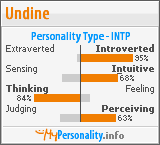
    Personality meme again

    If my extraversion scale gets any lower, I'm going to go live in a cave. INTP
    Click to view my Personality Profile page

    Might as well be the first snowflake

    About the end of July, I find myself avoiding looking at the sales parts of newspapers and also e-mail from the department.

    Why?

    Because they do not grasp that it is still summer. The ads want to tout Back to School items, and the chair wants to get everyone on board with the retreat/department meeting/training session that's been cooked up for us while we were thinking that it was still, well, July. It's as though you're having a good time at a party and someone reminds you that you have to do your income taxes when you get home. You can still be at the party, but it's not the same.

    It's bad enough that every department I've ever been affiliated with has scheduled something for the day or days just before classes begin. Don't they know that if days could be bought and sold like Monopoly real estate, they're taking Boardwalk and Park Place away from us? Right when every minute counts--so that you can fight with the bookstore about why your books aren't in, or change your syllabus for the fiftieth time--you get sucked away into meetings whose importance may rank as a 10 on the department's significance meter but as a 0 on your own.

    I did go to campus this week, and everything was as it should be: deserted, quiet, and dark except for a handful of intrepid graduate students. But what the e-mail and the ads tell me is that all too soon I'll have to ditch the shorts and t-shirt, and the writing and solitude, in favor of professional clothes and endless discussions of departmental business.

    Would someone please tell these people that August is still considered a summer month?

    Monday, July 23, 2007

    OT: Slow food for slow days

    I think that it's called the "slow food movement" because it's opposed to fast food and wants to promote family dining and local merchandise.

    However, I suspect that it's called the slow food movement because every item you put in your shopping basket becomes an exercise in moral dithering: Raised nearby conventional produce or two-states-away organic produce? I know "conventional close by" produce should win, but what if it's something like carrots or potatoes, where you can really taste a difference? Also, what about the people who don't have the luxury of paying extra for the local/organic save-the-planet option?

    Fortunately, the area around Northern Clime has a lot of organic farms, some going back generations and some (to judge the age of the proprietors) dating back the early 1970s when people moved here and decided not to (or forgot to) leave. It also has farms with a lot of beans and wheat. At the farmer's market on Saturday, I could purchase the following--all organic, all local--without any dithering at all: several varieties of goat cheese (served at local restaurants for much fancier prices), tomatoes, round green squash, tomatoes, corn, crookneck squash, basil, English peas, small potatoes (purple, red, gold), raspberries, cherries, and, yes, beef for other members of the family. And the best part is that all the vendors had those WIC/Senior Citizens signs to accept food stamps or whatever.

    And one more stop on the slow food tour: picking up a metal (ceramic inside) Sigg water bottle so that I can carry water from the Brita pitcher at home instead of buying plastic bottles of the stuff.

    These are small steps, but at least they're something.

    Saturday, July 21, 2007

    Random bullets of breaking the Internet fast

  • I've finished a whole week of the Internet fast, although I had to break it yesterday because of department business. After I got online yesterday before 5, though, I ended up just doing work: I not only cleared up a bunch of things on the to-do list but actually made inroads into . . . the Shame Pile.

    Do you have one of these, too? I heard this term once from a colleague and forthwith adopted it. The Shame Pile is for those items that are too far gone even for the to-do list. They're the ones that make you wince when you wake up at night, or when you're trapped (when driving, for example) and can't do anything about whatever it is you left undone. To get something off the Shame Pile made yesterday a red-letter day.
  • Ferule and Fescue has exactly nailed the disorientation and craziness that happens from too much non-conversation. Breaking the Internet fast yesterday and having all those conversations, even virtually, was a great mood-lifter.
  • As part of the Internet fast (one that I'm trying to keep), I'm trying to stay away from the Chronicle and related sites, but Chaser has an excellent post about a Chronicle article that I did take a look at. Apparently, reading syllabi qualifies you to know all about the professor, his or her classroom manner, and the level of concern for students. Quotations are preferred, and anything less than a 6,000-word syllabus means that you're an uncaring soul who deserves to fall into the fiery pits of rate my professors. I'm with Chaser on this one: be clear, be direct, be specific, and quit sacrificing trees and paper to your philosophical musings, which the students will either divine or not, as their inclinations guide them.

    Oh, and when students ask the question "What do I have to do to get an A in this class?" they don't always want to hear "Here are the criteria for an excellent essay, one of which is an interesting, well-argued analysis of a work." If a student is not getting an A in the class, which is often when this question gets asked, no amount of explanation, whether written on a syllabus or delivered in person, will suffice unless it comes attached to an A as a final grade.
  • OT: Prius speed

    From CNN:

    "Al Gore III, 24, was arrested early in the morning on July 4 when Orange County Sheriff's deputies pulled him over for allegedly driving 100 mph in his 2006 Toyota Prius."

    Of the many thoughts that should have gone through my mind (too bad about the speeding, it's good he wasn't killed, etc.) my real first thought was this:

    "Yes! Now the world will know that the Prius is capable of kickass speed. It is NOT just a golf cart with better headlights."

    Somewhere, someone in Toyotaworld must have had the same reaction.

    Wednesday, July 18, 2007

    The Internet experiment, continued

    Notes from an Internet vampire (well, almost an Internet vampire, though the sun doesn't go down at 5 p.m., thank God):

  • I feel much more focused, but . . . boring. I have no conversation outside the manuscript. This may be all right, though, since the primary recipients of said conversations are the cats.
  • I miss reading blogs during the day!
  • If the FedEx or UPS guy comes by to drop off a book or ms. for review, I greet him like a long-lost brother.
  • Here is the good part. Today's total: 1800 words. They aren't all good words, and I have a lot to go, but they're still words.

    Eventually, this will even out, I hope.
  • Monday, July 16, 2007

    The Internet experiment

    I decided to put into practice some of those tips from lifehacker.com and elsewhere about productivity. The chief one I thought I'd try is this:

    No Internet access until after 5 p.m.

    Here are the rules I set: NO Internet access until after 5 p.m., including checking bank balances, checking e-mail, reading blogs, reading newspapers, or tracking down the name of that incredibly obscure actor on IMDB. No looking up phone numbers or using the OED online. If I wanted to check on something, I could write it down and check on it after 5.

    Somehow, my days had become all about avoiding work: reading blogs, checking e-mail, looking up stuff online. I felt as though I had the attention span of a gnat, and as soon as I started working on a tough sentence, I had the impulse to go online and do something else.

    So far, it's working. I feel a lot calmer, somehow, and I'm getting a lot more reading done. The impulses to go online just for a minute to check something are diminishing. The writing is still coming along slowly, but it's better than before.

    Oh, and the great secret about e-mail in the summer is that no one is contacting me with grants, million dollar book contracts, or vital information on anything else--at least nothing that won't wait until after 5.

    Thursday, July 12, 2007

    Short update

    Not posting because I'm trying to get a piece of writing done that apparently doesn't want to get written. It's an unruly, willful thing and is forcing me to sit at the desk for long hours. This feels like a staring contest between my computer screen and me, and guess who's winning?

    I'll post more once the balance of power shifts.

    Wednesday, July 11, 2007

    Tuesday, July 03, 2007

    Morning walk

    .
    Morning walk
    Originally uploaded by undines
    I have become addicted to my morning walk. The route isn't that special or remote, though I hope to branch out, and it's only about 4 miles total, but it's the first exercise I have actually looked forward to for a long time. When I go to sleep at night, I'm actually excited about getting up early to walk; I don't even have to set the alarm. (Having a cat who thinks that only slackers sleep past 5 a.m. helps, of course.) Hearing and seeing the pheasants (squawk-AWK!) and quail is a nice side benefit, too.

    I hope to progress to running and thus to get in shape for some bike rides on the hills around here. They don't look like much, until you're on them.

    Just wanted to share something that is so much fun.

    Monday, July 02, 2007

    Personality test meme


    Your Score: Loser- INTP


    10% Extraversion, 60% Intuition, 86% Thinking, 33% Judging


    (Sorry--the picture was just too ugly!)


    Talked to another human being lately? I'm serious. You value knowledge above ALL else. You love new ideas, and become very excited over abstractions and theories. The fact that nobody else cares still hasn't become apparent to you...


    Nerd's a great word to describe you, and I seriously couldn't care less about the different definitions of the word and why you're actually more of a geek than a nerd. Don't pretend you weren't thinking that. You want every single miniscule fact and theory to be presented correctly.


    Critical? Sarcastic? Cynical? Pessimistic? Just a few words to describe you when you're at your very best...*cough* Sorry, I mean worst. Picking up the dudes or dudettes isn't something you find easy, but don't worry too much about it. You can blame it on your personality type now.


    On top of all this, you're shy. Nice one, wench. No wonder you're on OKCupid!
    Now, quickly go and delete everything about "theoretical questions" from your profile page. As long as nobody tries to start a conversation with you, just MAYBE you'll now have a chance of picking up a date. But don't get your hopes up.


    I am interested though. If a tree fell over in a forest, would it really make a sound?

    *****************


    If you want to learn more about your personality type in a slightly less negative way, check out this.

    *****************


    The other personality types are as follows...


    Loner - Introverted Sensing Feeling Perceiving

    Pushover - Introverted Sensing Feeling Judging

    Criminal - Introverted Sensing Thinking Perceiving

    Borefest - Introverted Sensing Thinking Judging

    Almost Perfect - Introverted iNtuitive Feeling Perceiving

    Freak - Introverted iNtuitive Feeling Judging


    Crackpot - Introverted iNtuitive Thinking Judging


    Clown - Extraverted Sensing Feeling Perceiving

    Sap - Extraverted Sensing Feeling Judging

    Commander - Extraverted Sensing Thinking Perceiving

    Do Gooder - Extraverted Sensing Thinking Judging

    Scumbag - Extraverted iNtuitive Feeling Perceiving

    Busybody - Extraverted iNtuitive Feeling Judging

    Prick - Extraverted iNtuitive Thinking Perceiving

    Dictator - Extraverted iNtuitive Thinking Judging


    Link: The Brutally Honest Personality Test written by UltimateMaster on OkCupid Free Online Dating, home of the The Dating Persona Test

    Saturday, June 30, 2007

    Proofs

    It's a little unnerving to realize that, as much as I believe that I've backed everything up in this Year of Hard Drive Crashes (p.s.: my backup drive that's less than a year old stopped working this week, making a total of 4 drives involving 3 computers so far this year), some things are just plain missing. Some I have in paper form and have rescanned into the computer.

    I got a set of proofs recently for a small, fairly straightforward project, though, and although I usually like to compare them with the originals, the originals were among those vanished papers. There may be a paper version deep in the bowels of a file cabinet somewhere, but instead, I just read them through and made the few corrections based on the how the text read.

    From editor friends of mine, I've heard of contributors to journals or collections who 'll go to the barricades in defense of their own wording. I'll do that, too, if there's something major. (The "major" test is this: would I squirm with embarrassment if this article came out under my name with that sentence construction or word choice?) Sometimes the editors introduce errors that lead to a fury of "stet" markings. Mostly, though, I figure that if it sounds like my language and isn't factually incorrect, it's all right with me.

    I hate to think where this places me on the scale of "proof Puritan" to "proof slut," though. What do the rest of you do?

    Wednesday, June 27, 2007

    Random bullets of reading criticism

  • When you're taking notes on a critical article and it's really good, do you find yourself taking so many notes and writing down so many quotations that you might as well memorize it?
  • Conversely, is there a halo/reverse halo effect when you read, much as there is when you read student papers, wherein after reading a really good article the next one seems pretty lame? Or is it that the article really isn't as good?
  • When you're reading a less-than-compelling article (have to be thorough!), do you ever succumb to the temptation to set free your inner snarky self? I find myself wanting to write things like "Dude! X made this argument 20 years ago" or "Well, duh!" even as I realize that this won't be helpful when I come back to the article in five years and wonder what on earth I was thinking.
  • Do you cringe when early critics (say, 1940s through 1960s) praise the "fidelity to Negro dialect" of some nineteenth-century author for something that we see as really, really racist?
  • Doesn't it make you wonder what tidbits of embarrassment critics of the future will find in our essays? For the record, I'm betting that all the "let's be dispassionate about/enthusiastic about describing the painful deaths of animals in the Hemingway manner" will be seen not as admirable aesthetic detachment but as a bad moral lapse by future generations of scholars.
  • Tuesday, June 26, 2007

    Why we teach critical thinking skills

    We teach critical thinking skills for a lot of reasons, but my zeal-o-meter for teaching these gets ramped WAY up by seeing hucksters and snake-oil salespeople like the person who wrote The Secret, which is, from what I've read in the papers, all over television shows like Oprah. This faux expert, with a cadre of other "visionaries," apparently says that you "attract" your own fate. What does this mean for the victims of 9/11 or Katrina?

    From her answers to the Associated Press:
    "In a large-scale tragedy, like 9/11, Hurricane Katrina, etc. we see that the law of attraction [this is her trademarked term for a centuries-old concept used by generations of earlier hucksters] responds to people being at the wrong place at the wrong time because their dominant thoughts were on the same frequency of such events."

    See how easy that is? No meteorological events, no weather patterns, no failure of government planning, no terrorism--just bad thoughts on the part of the victims, who are entirely to blame for what happened to them.

    Am I wrong in seeing this as a logical extension of certain other "visionary" principles?
    From Ron Suskind's "Faith, Certainty, and the Presidency of George W. Bush" in the New York Times in 2004:

    The aide said that guys like me were ''in what we call the reality-based community,'' which he defined as people who ''believe that solutions emerge from your judicious study of discernible reality.'' I nodded and murmured something about enlightenment principles and empiricism. He cut me off. ''That's not the way the world really works anymore,'' he continued. ''We're an empire now, and when we act, we create our own reality. And while you're studying that reality -- judiciously, as you will -- we'll act again, creating other new realities, which you can study too, and that's how things will sort out. We're history's actors . . . and you, all of you, will be left to just study what we do.''

    One of the things that I took for granted growing up was that wishful thinking or personal beliefs were not the same thing as reality. It's more than a little unnerving to see that this is no longer accepted as a principle on which everyone agrees. Part of the point of teaching is that students get to test their beliefs, which they consider realities, against the convictions of others. The dimwitted demagogues referred to above, though, demand that their convictions be regarded as truth.

    Okay, here's an anecdote that expresses a little of what I mean:

    The American transcendentalist Margaret Fuller once said, “I accept the universe.” When Thomas Carlyle heard this, however, his comment was this: `Gad! she’d better!’”

    I'm with Carlyle on this one.

    Monday, June 25, 2007

    Library gaming (from Inside Higher Ed)

    Inside Higher Ed has an interesting article encouraging librarians to think like gamers:


    “The librarian as information priest is as dead as Elvis,” Needham said. The whole “gestalt” of the academic library has been set up like a church, he said, with various parts of a reading room acting like “the stations of the cross,” all leading up to the “altar of the reference desk,” where “you make supplication and if you are found worthy, you will be helped.”

    So if this hierarchical model doesn’t reach today’s students, what will?

    James Paul Gee, a linguist who is the Tashia Morgridge Professor of Reading at the University of Wisconsin at Madison and the author of Why Video Games Are Good for Your Soul, argued that librarians need to adapt their techniques to digital natives. A digital native would never read an instruction manual with a new game before simply trying the game out, Gee said. Similarly, students shouldn’t be expected to read long explanations of tools they may use before they start experimenting with them.


    Some thoughts:

  • Do I really have to play video games? Way back when, I tried a few of the text-based games that the Little Professor and Acephalous spoof so beautifully (heck, I even participated in MUD and MOO activities), but a game for me = less effort than work. If I have to put that much effort into it, I'd rather just work, thanks.

  • If preferring to experiment rather than to RTFM makes me a digital native, then I guess I am one, no matter how much I dislike the term.

  • I've seen the "library as church" metaphor before but had never thought of the reference desk as its altar.

  • It sounds as though those of us who are already building a "find this" model assignment and turning students loose rather than lecturing about the Library of Congress system are doing the right thing.

  • Wouldn't it be great if someone built a game that was based in finding library materials? To tell the truth, this would probably be more popular with teachers than students, but if it meant one less lecture on doing a keyword search, students would surely embrace it.

    On a more serious note, it's true that most students would rather deal with technology for an hour than ask a reference librarian something that would get them where they want to be in five minutes. From the article: "Even then, he said, librarians shouldn’t say that they are providing formal training, but should say things like 'let me show you a short cut,' the kind of language students use with one another all the time."

    Sometimes students are intimidated by the process, but sometimes there are other reasons. Although about 95% of the reference librarians I've encountered have been more than helpful, I've met a few who were so irritatingly condescending (a la the "priest at altar" model) that I steered clear of them: "This is the library catalogue online, you see? You can put in your search terms here, and then you can narrow your search by adding words." Sometimes, too, as the article says, they want to lecture about the history and nature of the resource before helping anyone to use it.

    Oh, and "dead as Elvis"? He's totally alive.
  • Grad school compendium

    This link is a little belated, but Horace has a great compendium of advice for grad students at To Delight and To Instruct.

    And while you're at it, read Dr. Virago's great post on the research project she teaches.

    Thursday, June 21, 2007

    Will work for praise

    Reviewing and evaluating is part of our job; if you think about it, it's most of our job as professors. We're paid for it, in one way or another: salaries (for teaching); books or checks, for manuscript reviews for presses; a "professional service" line on the cv for being a manuscript reader for a journal.

    If I'm honest about it, though, the real reward for some of this is just plain praise. I was really pleased when a number of the students this summer took the time to say (in turning in their last project) "thanks--your comments really helped" or "I learned a lot" or "I really enjoyed the class." Maybe I'm naive; a cynic might say that they're trying to ingratiate themselves so that a softened-up, benevolent Dr. Undine will go easy on the grading. Since all the grading is pretty straightforward, however, and (in an online class) there's no wiggle room for "participation," I'd like to think that they were sincere.

    The same holds true for reviewing. Although there's a pro forma quality to thanking the reviewers in the acknowledgments part of a book, when an editor this week took the time to thank me for my comments and pointed out the ways in which they'd be helpful for the author, it made my day. Eventually I'll fill out the forms and collect my check (or books), but right now, I'm still basking in being paid in praise.

    Wednesday, June 20, 2007

    Random Bullets of Almost Summer

  • Does everyone put off all kinds of tasks (shopping for clothes, painting, various household things like buying a doormat) until summer, or is it just me? It's as though I've been underwater and come to the surface, only to notice that the car needs to be cleaned and that the nondescript dark wool stuff I wear all winter really ought to be put away, now that it's June.
  • I believe that my cat could run some branches of the federal government better than they are run now. Let's review the sequence:
    1. Government announces that passports will be mandatory next January for travel to Canada and Mexico and that some new kind will be mandatory this summer.
    2. People with travel plans in the works dutifully apply for passports.
    3. Government is shocked--shocked!--to see that people are applying for passports in record numbers. From the Washington Post: "'We simply did not anticipate Americans' willingness to comply so quickly with the new laws,' Maura Harty, assistant secretary of state for consular affairs, said in a written statement to a Senate Foreign Relations subcommittee." Apparently more than 110,000 passport applications are "piled in closets, the supervisor's office, and the break room."
      If you tell people they can't go out of the country if they don't comply, why would you be surprised if they try to comply? That's like being a McDonald's manager and saying "Who knew that people would show up for lunch and that there'd be a noon rush?"

  • The productivity apps are having an effect: I can see the clock ticking even as I'm writing this.
  • Now I'm off to get more house maintenance stuff done (oil change for car) before getting back to work.

    [Edited to add: I forgot the big one! Summer school is over and the grades are in--whoopee!]
  • Saturday, June 16, 2007

    Productivity apps

    Part of the peri-writing process described below really doesn't have much to do with writing at all (like ordering books that I might need someday from abebooks.com). Since hope springs eternal, though, here are three downloads for Firefox that I'm trying out in hopes that they'll help productivity.

  • Do you hate those flashing little movies that come up on every site nowadays? I used to move the screen up and down, skipping paragraphs, even, so that I could stand to read the text at the NY Times and other sites. This extension (Flashblock) blocks them and puts a little F in the space instead. You can click on it if you want to see the picture.
    I completely love this extension. https://addons.mozilla.org/en-US/firefox/addon/433.

  • Pageaddict: https://addons.mozilla.org/en-US/firefox/addon/3685 . I just saw this one via Lifehacker and am trying it out. It'll tell you how long you spend on various web sites, which could induce enough guilt to get you back to work.

  • Timetracker: https://addons.mozilla.org/en-US/firefox/addon/1887. This is another one I saw on Lifehacker and just installed. It keeps track of the time you spend web surfing. You can set it up to ignore legitimate, work-related sites. Again, I'm hoping the guilt factor will spur on some productivity here.
  • Thursday, June 14, 2007

    On Wasting Time

    Dr. Crazy has a post up about wanting the summer fun to start. If you're an academic, it never can because--surprise!--there's always another book to read, manuscript to work on, and so forth.

    Exactly right. When I emerged from the cocoon of feeling too sick to work earlier this week, I thought, "all right, now I'll be productive." I have deadline-driven writing to do, but my brain is still in lazy sickness mode: it's hard to sit at the desk, let alone to work or to make my brain think about what it ought to be thinking about. What I apparently can do, very well, is to sit in a trance and think about the work I'm not getting done.

    About the best I can manage now is what I call "peri-writing." It's not really writing, or even pre-writing, but it's the work that surrounds writing. This involves huge amounts of time (in between reading a manuscript sent to me for review) spent looking up things I ought to read, making notes of things I should look at, and so forth. The manuscript review is part of this, because I can then say to myself, "hey, this person isn't as lazy as you are, and here's a manuscript to prove it. Get moving!"

    Tuesday, June 12, 2007

    Why professors in English should be happy about The Sopranos

    We should be happy about The Sopranos.

    I don't mean just The Sopranos, although that's been the focus of a media frenzy for the past few days. I mean any well-written television program that inspires the kind of response that viewers have had to shows recently--Buffy and the rest of Joss Whedon's creations, or maybe Lost (which I haven't seen) and some others.

    As I read the media frenzy (which was excellent procrastination fodder, by the way), I came across the following items:

  • The HBO site actually crashed after The Sopranos aired because people were trying to get to it, presumably to enter their opinions (which are about 60/40 opposed to the ending, from what I've read).
  • The New York Times and other major papers covered the ending. Even NPR, which usually acts as if it has never heard of television and is above all that crass, plebian interest in the visual, weighed in.

    What I'm seeing, though, as a person who teaches about interpreting texts is . . . a huge interest in interpreting texts.

    Everyone has an idea about the ending (see some theories at the New York Times, and everyone passionately wants to share those interpretations. Isn't that what we dream about as classroom teachers?

    On interactive boards, people talked about symbolism and the meaning of the number three. They evoked Dante's Inferno to explain what David Chase was up to this season. They explored imagery, the length of shots, and point of view. They brought up allusions to literature, to the Bible, to music, to Italian legends about cats, and to previous episodes in the series. Every glance and gesture had meaning, and determining that meaning became the order of the day.

    And, when some people got too far off base, others would correct them: "Where's the evidence for that?" Do you hear that? That's the sound of "Where's your support for that in the text?" When someone posted a particularly analytical or insightful comment, others praised it. Those with a greater range of allusions chimed in with the information and were thanked.

    Finally, the final episode made these interpreters of texts deal with uncertainty. Multiple interpretations, undecidability, fragmentary glimpses of an ultimately elusive meaning, the wish to posit an author/authority function that frustratingly won't respond--hmm, have any classroom instructors dealt with that in modernist/postmodernist works before?

    I don't say that we have to teach The Sopranos, though there are a lot of critical essays on this and on Buffy already. What we ought to take away from this, though, is that there is a hunger for interpreting texts, if it's the right text and the motivation is there. Supplying those is our job.
  • Monday, June 11, 2007

    Online class: student voices

    This is the last week of the online class. What I've mostly been doing is grading the things the students have sent me and keeping the discussion going. (I have not made peace with WebCT/Blackboard but have wrestled it to a standstill.) I have only met one of them in person, but I have a sense of their personalities (or think I do) from our frequent online contacts.

    It's a lot like a face-to-face class in some ways. Some are cheerful and personable in their interactions ("Hi Professor Lastname" "Have a nice weekend") and some are less so, sending the attached materials but leaving the message blank. A couple are petulant. In the first week, one of them wrote to say, "Hey Undine. You set this up in a confusing way." In my coldest tones, I explained that I was sorry he felt that way (see non-apology apology, the art of) but that everyone else had managed to figure out how the class was organized, especially since the organization was explained in three e-mail messages and the syllabus, which I suggested he review. He had settled down by the next week.

    I guess the amazing part to me is that from a collection of names on a roster a few weeks ago, they've become real students to me. I know they were real students before, of course, but I mean students with real voices. You know the way that you can sometimes see a student after a few years and maybe remember a paper that he wrote or a comment that she made yet not remember the student's name? That kind of student voice.

    Tuesday, June 05, 2007

    On Grad School: Our Motto is "Catch up!"

    Dr. Crazy's recent and much-admired post on grad school has Horace at To Delight and To Instruct collecting such posts. Since she and others have said more gracefully the important parts, what follows is a short response, in random bullet form.

  • I did not experience grad school as a process that broke down my entire sense of self and rebuilt it, a la the boot camp model. I didn't experience my professors as cruel, either; that may be because they weren't, or it may be because I was too oblivious to notice.
  • One of the biggest differences between grad and undergrad was that in grad classes, you were supposed to "get it" without being told. If a name was mentioned casually, you didn't raise your hand and ask but went scurrying off to the library to figure out who it was before anyone could figure out that you didn't know who it was. If a professor said, "Nice work. This should be publishable," he never gave any suggestions about how to make it publishable, or where it could be sent, or what conferences it might be suitable for, or anything else. If I had to identify an unofficial model for grad school, it would be "Catch up!"
  • Another motto would be "nobody cares what your problems are." This may sound heartless, but in retrospect, it prepared us for real jobs. In reality, as grim as it sounds, mostly people don't care if you're having a bad day, or you're depressed, or you just can't get motivated to do what you promised. They just want it done, and whining about it (which was semi-acceptable at lower levels) just wasn't acceptable. You could gripe to your fellow grad students about X or Y, but you were expected to suck it up, a useful talent--and policy--for later life.
  • Another useful thing to note is that you don't have to--and indeed shouldn't--express every opinion you have. I recall sitting in a class in Old English one time and being struck by an image in the poem we'd read for that day that I thought was quite beautiful. "Purple passage!" scoffed the professor, and the rest of the class laughed. My opinion didn't change (still hasn't--take THAT, Professor X!), but I recognized the wisdom of keeping my mouth shut. (And I've published more than he has, too, so there!)
  • Some theories and approaches are indeed transformative and will blow your mind. What they don't tell you is that some, well, aren't and won't. You can work your way through mind-bogglingly dense prose sometimes and discover genius, but sometimes that prose is just a cover-up for mind-boggling banality. The painful part is that both take equal time to read and decipher, and the critical fad significant critical paradigm of today may well be yesterday's news in a year or two. I've been out of grad school long enough to have seen this in action, so trust me on this.
  • Snotty, pretentious, PITA fellow grad students do exist. Avoid them, if possible, since they carry a negative energy that's hard to break free from.

    So, what's the short version? Grad school isn't a Vincent Price chamber of horrors. Keep your own counsel, take pleasure in and sustenance from the good friends you'll make, do your work, and believe that you can do it.

    technorati tag:

  • Good Timewaster

    If you have time to waste, or if you're grading, check out Making Light's comments section, in which the commenters render great works of literature in lolcat and leetspeak. A sample (Pride and Prejudice) at #96:

    Rich man can has girl.

    Bngli: i can has dance?
    J4N3: k
    l12: i can has dance too?
    DarC: no u ugly go way
    l12: LOLz
    Bngli: BRB

    MrC0lnz: l12 i can has heart?
    l12: no gway
    Chrltt: u can has me
    MrC0lnz: K BRB

    Wikm: IM IN UR TOWN SEDUCIN UR DAUTERS
    lyd14: o hai

    DarC: i can has heart?
    l12: no gway u rude

    l12: IM IN UR PEMBERLEY ADMIRIN UR STUFF
    DarC: hai
    l12: OMG thought u were AFK!!1!

    Monday, June 04, 2007

    Office Space

    Thomas Hart Benton at the Chronicle writes about why he's moved from his nice home office (with an Aeron chair! I've never even seen a real Aeron chair!) to the barn:

    Another more common distraction at home and at work is the availability of the Internet. I am a regular reader of at least 30 blogs and more than a dozen newspapers. And I am constantly browsing for new book recommendations on Amazon.com and searching for books on sale at several other sites like Daedalus, Labyrinth, and Edward R. Hamilton. That feels like the moral equivalent of work, even though it is really procrastination.

    All of those activities, combined with my addiction to e-mail, means that I receive a continuous flow of custom-tailored information that is almost always more interesting to me than what I am writing.
    . . . .

    So for all its lack of amenities, my third office in the barn offers fewer temptations to avoid writing. I have no Internet connection, and there's no one here to speak to besides myself. So far, my productivity has improved significantly, even though my desk is a door on two sawhorses, and I am sitting on a box.


    In other words, the writing space he's now chosen makes it easier to write, an idea that fuels some of my most persistent fantasies about writing (that it's easier in a coffee shop, for example). I write in my study at home or sometimes in a library; it's hard to write in my office on campus for the reasons Benton mentions.

    But.

    I have been known to harbor what is known in my family as a "writing house" fantasy. This fantasy encompasses everything from a tiny house placed in the backyard to something along the lines of Mark Twain's study in Elmira. Sometimes I dream of building one of these on the side of a mountain that's about 10 minutes from here (on land I couldn't afford anyway, of course). In my dreams it might look like Michael Pollan's writing house, or it might be something more fanciful.

    Curse you, Thomas Hart Benton! Now I am in full writing house fantasy mode, when all I really need to do to be productive is turn off my Internet connection.

    Sunday, June 03, 2007

    Procrastination and Productivity, Redefined

    From the New York Times:

    “The longer you work, the less efficient you are,” said Bob Kustka, the founder of Fusion Factor, a productivity and time-management consulting firm in Norwell, Mass. He says workers are like athletes in that they are most efficient in concentrated bursts. Elite athletes “play a set of tennis, a down of football or an inning of baseball and have a pause in between,” he says. Working energy, like physical energy, “is best used in spurts where we work hard on a few focused activities and then take a brief respite,” he says.

    And those respites look an awful lot like wasting time.

    It has taken me years to make tentative peace with my stops and starts during work. Every morning I vow to become a morning person, starting full speed out of the gate. And every morning I daydream, shuffle papers, read e-mail messages and visit blogs, and somehow it is time for lunch. Then, at about 2 p.m., a sense of urgency kicks in, and I write steadily, until about 5 or 6, when I revert to the little-of-this, some-of-that style of the morning.

    I apparently have an avatar working for the New York Times, or maybe just someone who watches how I work.

    Saturday, June 02, 2007

    Posts on grad school

    Horace at To Delight and To Instruct is collecting posts on grad school advice; let him know if you have some.

    Friday, June 01, 2007

    Day for Night

    In Diary of a Mad Housewife, the heroine reads Proust when she is sick. I had a colleague once who said that she didn't mind being sick because then she caught up on all her theory reading--Foucault, Derrida, and all that.

    Theory reading and Proust.. Are they kidding?

    The weightiest material I've been able to manage this week is the New York Times online and some blogs. Even that reading fails, though, when you're up and feverish at night. At those moments, television is your best friend.

    Since I am usually asleep within seconds, I did not know what insomniacs must have known for years about television in the middle of the night: that dreams of perfection and wealth can be yours if only you follow the instructions of those who have shows at 2:30 a.m. Here is some of what I learned:
  • People have become rich! rich! rich! (which apparently involves lying around on boats with a cool drink) in real estate with no money down. You can't lose!
  • A kindly man will show you how to turn on your computer and open up Word if only you get his series of DVDs.
  • You can buy your own tiny plastic helicopter that really flies and send it careering around your house via remote control, to the probable consternation of your cats and definite danger to the eyes of anyone in its path.
  • Extremely buff people get that way by using a series of increasingly bizarre contraptions and videotapes at home. This is especially true for a blonde woman who due to cosmetic surgery can no longer move any muscles in her face.

    I don't take Nyquil unless I'm desperate because it inspires Hunter S. Thompson-esque dreams and leaves me exhausted the next day, but I'm beginning to wonder if lying there and watching tv when you have a fever doesn't have much the same effect.
  • Tuesday, May 29, 2007

    Random bullets of (post) conference

  • The conference was good: lots of good panels, lots of necessary meetings, and pleasant encounters with colleagues from other institutions.
  • Some of my students were presenting there for the first time, and they did an excellent job. If you think about it, we're not responsible for how they perform (except indirectly), but you know what? I felt proud anyway.
  • At the airport, I was introduced to the latest dance craze: the change-the-plane shuffle. Because of mechanical problems, we had to leave the plane we were on and travel to a whole other concourse to get on another plane. Trekking over to another concourse was a thoughtful idea; they probably thought we'd like the exercise after sitting on the plane that wasn't going to take off for so long.
  • To judge from today's e-mail, everyone at the conference spent all day yesterday busily following up on things, generating tasks, and so on. Don't they know the Rewards Rule for Conferences? When you get back, you get to spend the whole day doing something that you actually enjoy.

    I don't always observe the Rewards Rule, but since I have come down with a nasty cold, I did yesterday, which was devoted to . . .

    a combined Barbara Stanwyck and Joan Crawford film festival, screened here at home in glorious black and white.

  • Friday, May 25, 2007

    Everything old is new again

    Brief conference update:

    I've noticed that a lot of my students don't wear watches (they use iPods or cellphones to check the time) and have started paying attention to this when in sessions as well. Some of the people here (mostly men) don't wear watches, either, but I've seen them pull their cellphones out of their pockets and check them quickly, which means, I suppose, that they're checking the time and not their messages.

    Yes! We are back to the age of the pocket watch, when men did this all the time, and I think it is charming.

    Tuesday, May 22, 2007

    The broccoli of travel

    Conferences are the broccoli of travel. Want proof?

  • Although I will dutifully eat broccoli without much enthusiasm for it, some madness causes me to buy it because I always think I will like it better than I do. Ditto for responding to a CFP.
  • Everyone I know and respect seems to be enthusiastic about eating broccoli, and I thus believe that I should share this feeling. Ditto conferences.
  • When it comes right down to looking at the broccoli on the plate, though, I secretly wish that I had a nice, ripe tomato instead. I eat it because there's no way of getting around it. (Professional development and conferences, anyone?)
  • Once I've eaten the broccoli, I feel as though I have Done a Good Thing for my health and all that. I don't enjoy eating the broccoli, but I enjoy knowing that I have eaten it. In conference world, this translates into getting back and knowing that you don't have to do it again for a while.

    At least it's not the brussels sprouts of faculty meetings that I'm facing.
  • Quick update

    I'm working on a paper and will shortly be on my way to a conference; I'll post in a few days.

    Thursday, May 17, 2007

    It's a blog world, after all

    This is what comes of reading blogs right before falling asleep:

    I dreamt that I was traveling all over blogland. I helped Profgrrrl pick out a house to buy and helped Dr. Crazy with her cleaning project. I stopped by jo(e)'s to admire her lake and listened to music I hadn't heard before with Professor Zero and Chaser. I saw Horace's and Ianqui's pictures from their travels abroad. There were other travels, too, but these are the ones I recall.

    Very strange.

    Tuesday, May 15, 2007

    OT: Charities in the news

    From the Los Angeles Times:

    In his will, Di Stefano allotted $33 million to Greenpeace International. The year before he died, Greenpeace International dissolved and was absorbed by the related Greenpeace Fund.

    The Salvation Army went to court, arguing that the specific organization named by Di Stefano no longer existed and therefore was not eligible for the gift. Instead, the Salvation Army said, that portion should be divided among itself and the other six charities.


    Didn't the Salvation Army just inherit a gadzillion dollars from the widow of Ray "More Money than God" Kroc of McDonald's? Does this strike anyone else as being, well, really greedy on the part of the Salvation Army?

    Saturday, May 12, 2007

    Does this mean I can come out of the (grammar) closet?

    From WaPo:
    The National Council of Teachers of English, whose directives shape curriculum decisions nationwide, has quietly reversed its long opposition to grammar drills, which the group had condemned in 1985 as "a deterrent to the improvement of students' speaking and writing."


    I don't teach diagramming sentences in a formal way, as the instructors in the article do. I do, however, assume that students can follow the simplified versions (S-V-DO,S-LV-SC) once I've explained them, and yes, cruel taskmistress that I am, I do make them learn the difference between a clause and a phrase. (Mistress Undine cracks her whip and points to the board, and the students dutifully chant, "That's a direct object and not a subject complement, Mistress Undine.")

    For the record, I did learn to diagram sentences at one point. I learned this concept late, and it was a revelation to me, as was the idea of the thesis statement, the topic sentence, and all the other supposedly repressive accouterments of traditional writing instruction. I had somehow gotten away without learning them for an embarrassingly long time (due to being a reader and hence a decent writer, I suppose), but when I did learn them, guess what happened?

    a. My wounded sense of self went to sit in a corner because it was crushed by the cruelties of form, and I never wrote another creative word.
    b. I began to march in lockstep with the other prisoners of the five-paragraph essay (which I had NEVER heard of until I began to teach first-year composition, at which point I learned that it was an instrument of the devil).
    c. I loved the idea that there was a system, form, and structure to language that would not only explain it but would make me a better writer and a better reader, because I had tools for analysis. [If you picked this one, you picked right.]

    If there are ways that we can help students to improve their writing, and if sometimes the lightbulb goes on because we've given them a concept and (gasp) even made them work on a sample that isn't their own writing once in a while, shouldn't we do it? Isn't that more productive than refusing to explain the concept of, say, an appositive because we want them to divine it from their inner consciousness even if it takes five drafts to do so?

    Wednesday, May 09, 2007

    Brief interlude in reading

    Sometimes, when I am reading a novel in which every page introduces a new set of characters, all bristling with nicknames and dialect but with little else to distinguish them, and I have to start writing down a list to remember them . . .

    I long for a Henry James novel: four characters and 800 pages of nothing but artistic descriptions and endless, leisurely dissections of their innermost thoughts.

    Four is a good number. I can keep track of four.

    I'm just saying.

    Tuesday, May 08, 2007

    Goodbye, semester; hello, summer session

  • I turned in grades on Friday. My summer school class started today.
  • Since it's an online class that I've taught before, I've been updating and rewriting and generally fine-tuning the materials. This was my "weekend off."
  • However, I console myself by thinking that movie stars of old like Clark Gable and Barbara Stanwyck also had to turn around after finishing a movie and report right away for the next one. That's it: I'm a movie star.
  • Is anyone else demented enough to enjoy (very briefly) the period of setting up the gradebook in Excel, when everything's all shiny and the reality of grading hasn't set in yet?
  • You notice I didn't say anything about enjoying Blackboard/WebCT. I estimate that I spent a good hour of the time just waiting for it to upload and load things, to say nothing of the times that it just plain melted down and declined to do anything at all.
  • Among my grievances is the tiny box--about the size of an address label--that Blackboard/WebCT allows for those who want to write something in HTML and thus control the appearance of the page. Add that to the copious amounts of garbage code that Word inserts into everything, and inserting code into the page becomes an exercise in patience, like those artists who write names in calligraphy on a grain of rice.
  • I really should stop complaining about Blackboard/WebCT, but the school uses it and isn't inclined to change.
  • Friday, May 04, 2007

    Reality Check

    Stern PSA voiceover asks "Has this ever happened to you while you were grading? Abusers of the addictive drug of grading may experience flights from reality, flashbacks, and an inability to escape from their grading-riddled world."

  • You look at a word like "receive" or "separate" that's correctly spelled and all of a sudden . . . it looks wrong because that's not the way you've seen it spelled the last twenty times you've read it.
  • You could swear that you taught your students that story and essay titles were punctuated with quotation marks . . . and yet . . . the evidence of their papers tells you that your mouth was moving but no sounds actually escaped that day.
  • You know that Faithful Student can talk about literature and speak in sentences, because you've heard her do it in class, but the evidence of the paper before you tells you that you were hallucinating all along.

    Grading. What a long, strange trip it's been.
  • Thursday, May 03, 2007

    Random Bullets of Grading

  • Why is it that no matter how much and how carefully I proofread an exam, I often misnumber the questions in one segment?
  • Why, after I've explained the directions (which are printed at the top of each section of the exam with some words in bold) would a student who ought to be able to answer the identification questions with ease neglect to answer the number of them that she was supposed to answer?
  • Why do some students come to an exam that they know will contain essay questions without bringing paper with them? (I don't use blue books, but they know that they need to bring paper.)
  • Why do other students write their essays on paper that to all appearances they've been carrying around in their back pockets since the beginning of the semester, if indeed they're not using heirloom paper carried around by their parents when they were in college? The wrinkles in this stuff makes it about as droopy as an old linen handkerchief.
  • Why do I put the paper of the student whose writing has tortured and wordy syntax at the bottom of the pile? It's not as though the writing is going to get better once I've gone through the rest of them.
  • How does this student manage to write about twice as much as his classmates, which means that I have to work my way through twice as much bad writing?
  • Wednesday, May 02, 2007

    Cliche watch: "digital native"

    In a professional meeting recently, I heard someone lament that she was not a "digital native" and referred to herself as an "immigrant" in digital culture.

    Maybe this has some usefulness as a metaphor in education circles. Maybe it has achieved some status because of the current fashion in literary studies for metaphors of cosmopolitanism, immigration, transnationalism, migrations, etc.

    Mostly, though, as used in conversation, the "digital native" idea creates a false distinction. It assumes that there is a fundamental inability to understand a technology if you haven't grown up with it, which is an assumption or belief and not a fact. It also assumes that various technologies cannot become naturalized or do not seem natural to those who haven't grown up with them.

    The concept of "digital native" seems to come from the touching belief of each generation that its technologies are so transformative, so life-changing, that no one over the age of seven can grasp their full impact except as an outsider. My students might like to say (in their favorite cliche) that this has been true since the dawn of time, but let's just take the twentieth century:

  • 1920s: "These kids today and their automobiles! They don't have to harness up Bessie to the wagon to go into town anymore. They're so mobile! How will we ever understand the ways they think? We are not automobile natives and can never, ever catch up. "
  • 1950s: "Why, this new generation can actually SEE Jack Benny on television instead of just hearing him on the radio! This will totally transform the way we teach. Teachers will become obsolete, since everyone will just listen to a master teacher on television. We are not television natives and can never understand the ways in which their brains are wired." (If you don't think this is accurate, check out an old Life or Time magazine from the era.)
  • 2000s: "These kids today are digital natives, and we, poor sods, are always going to be digital immigrants. They think in completely new ways, and we can never, ever catch up!"

    I don't know why this metaphor annoys me so. To be honest, it's no more annoying than the Boomer/Gen X/Gen Y cliches that lazy magazine writers bring out when they have a big chunk o' space to fill with feel-good or feel-bad anecdotes. ("Boomer Files" in Newsweek, anyone?) When I hear people use "digital native," though, a lot of times they're flapping their hands about how they'll just never get the whole concept of these internet tubes in the ways that the young folks do, which seems to me both (1) lazy and (2) a fundamental evasion of the problem, which is their unwillingness to engage with digital culture.

    Well, guess what? This divide isn't generational. I know 70-year-olds who can reinstall hard drives, reset a computer's BIOS (or whatever it is), and use Photoshop in ways that would put the rest of us to shame and supposed "digital natives" who can't send an attachment.

    So do I think that the digital revolution (to be pretentious about it) has changed the ways in which people, and especially our students, think, read, and access information? Of course it has. But the "digital native" idea? Ultimately, that's a stereotype that, like most of them, tells less about the people being categorized than about those who seek to categorize them.

    [Update 12/5/07: There's a good (and more serious) essay about this, including additional links, at Confessions of an Aca/Fan.]
    [Edited to add: There's also just the slightest possibility that corporations and advertisers have found a way to make a buck by preying on our insecurities and anxieties about teaching "digital natives," just as they've managed to do when selling us mouthwash and deodorant. Nah, that couldn't happen.]
  • Tuesday, May 01, 2007

    Dr. Popularity

    If you're teaching a course required for graduation, and you're teaching it online (as I am this summer), chances are that you've never felt so popular in your life.

    The class has been filled for a few weeks now. Since it's a writing class, I can't add anyone unless I'm willing to look like St. Sebastian. (Overloading a writing class not only makes bad sense pedagogically but also encourages administrative types to wonder whether EVERYONE shouldn't have an overload--not a popular idea.) I have to tell everyone who contacts me to (1) call the department and ask to be put on the waiting list, if there is one and (2) check the online registration to pick up a space if someone drops.

    Although I have to give this same advice to everyone, I'm getting a variety of appeals:

  • "Hi. I have a full slate of courses in the fall and can't take this class then. I need to graduate in the fall, so can you let me in?" I forbear from suggesting that this person might have thought about taking the course before being a graduating senior.
  • "I need this course because I have to stay home this summer and take care of an ailing family member." Sorry--I wish I could, but I can't. It'll be offered again this fall, though.
  • "Hey there. Can you let me into this course? [Complex registration story follows.] I know it means more work for you, but it would be better for me." Yes, I'm sure it would. No, I can't let you in.

    I've heard back from at least one who was able to pick up the course when a spot opened up. I wish I could be happier about this, but sometimes that just means that someone's been dropped because of fees/a registration hold/tuition nonpayment, which means I'll get another message in a week or so:
  • "Hi. I was enrolled in your class, but I got disenrolled because of [insert bureaucratic foulup here]. Can you let me back in?"

    And the answer again will have to be "sorry--no."
  • Monday, April 30, 2007

    Point to Point Navigation

    I am what might politely be termed "directionally challenged." This means that, although I can read a map, I am usually lost, especially if someone's idea of giving directions is "go north two blocks and turn west." Say what? How would I know which way west is?

    Thus when people tell me that they've driven into (to use joe's system of naming) Big City Like No Other or Windy City or the Land of the Bean and the Cod to see a show, an exhibit at the museum, etc., my impulse is more to ask "what route did you take?" and "where did you find a place to park?" than about the exhibit itself.

    Due to frequent trips there, though, I can almost navigate around City Where Every Major Street Ends in a Bridge without getting too lost or without hurtling across a bridge into another city (and sometimes into another state). I would like to think this is because I know the streets, but after I took the wrong exit on a recent trip (i.e., not the one that Google Maps told me to take), I was able to get to the hotel by thinking to myself, "I must be close, because the trees look right." And I did get there, all because the trees looked right.

    This doesn't bode well for taking up orienteering as a hobby, but did I ever feel as though I'd accomplished something once I got to my destination!

    Friday, April 27, 2007

    Anyone have some ruby slippers?

    I am at a conference, and I *so* want to be home. Classes are over, and all that's left is a mountain of grading and a big heap of writing to do. Oh, and maybe something I *want* to do for a change: put some tomato plants in the garden to feed my addiction. For me, tomatoes = the crack of vegetables.

    Here, I'm pretty much done. Paper presented? Check. Chaired a session? Check. All that's left is a meeting at which I have to speak informally, so I guess I have to stay.

    But if I had a pair of ruby slippers, I'd be clicking them three times and channeling Dorothy.

    Thursday, April 26, 2007

    Short observation: your tax dollars at work

    Dear State Representative,

    Why does the road between East Nowhere and Palookaville widen out to three lanes going in the same direction? Does the blowing of tumbleweeds and sagebrush across the road close one lane from time to time? Do the cattle trucks really need to speed shoulder to shoulder between East Nowhere and Palookaville? Is there a reason why this road gets the Autobahn treatment while the road from U town to Big City is a two-lane road?

    Are you going after the "Bridge to Nowhere" vote? Are you in cahoots with Ted Stevens?

    Wonderingly,

    Your constitutent

    How to tell if the writing is going well

    If the kitchen is clean, right down to those portions of the stove that have to be cleaned with toothpicks . . .

    And the microwave is so clean that it has no signs of ever being used . . .

    And the rugs all have tracks from the vacuum cleaner . . .

    Then the answer is no. No, it's not going well.

    Tuesday, April 24, 2007

    Poetic justice

    Message yesterday from Stu Dent (to borrow Profgrrrl's pseudonym for them):

    "Hi, I'm sorry I haven't been in class for a while but I've been very sick. Here is my paper."

    Stu Dent didn't make it to class today, either.

    Today, as I'm walking into the library, I see Stu Dent walking jauntily down the hall, not looking a bit sick.

    I said hello and gave him The Look. He did have the grace to look embarrassed.

    Sunday, April 22, 2007

    OT: A whistleblower at the FDA saves dogs' lives

    At a time when US pet food companies are importing tainted materials to put into pet food, here's a story about Victoria Hampshire, a vet who was demoted and nearly fired from her job at the FDA for trying to protect dogs from an unsafe medicine:

    http://www.msnbc.msn.com/id/18137930/


    Almost 500 dogs had died after taking Proheart 6 — surpassing all competitors combined.

    But Wyeth was known for strongly defending its drugs from claims of harm. . . .
    Many vets also liked replacing pills with the twice-a-year shot, which put heartworm prevention back into their hands. One vet with ties to Wyeth lectured colleagues about seizing on Proheart 6 as a “hook” to pull in healthy pets for profitable regular exams.

    . . .
    [Hampshire] was sent to an interim FDA office job within the capability of “anybody with half a brain,” she says. She didn’t know where the investigation would lead. She didn’t know who might be bent on ruining her career, but she looked for a better job somewhere. She saw — or imagined — warning signs and potential enemies everywhere. She hoped for protection from members of Congress she contacted.

    . . .

    In June 2005, a Wyeth manager made a sales call at an Alabama veterinary practice, where he openly blamed Hampshire for the Proheart 6 recall, according to a confidential letter written by a vet there to the FDA. The Wyeth employee boasted that the company had her investigated by private detectives, and she had been “taken care of,” according to the letter obtained by The Associated Press. He then predicted the drug’s swift return to market.

    Read the whole thing; it has a happy ending.

    Saturday, April 21, 2007

    WebCT and Blackboard: Feed me!

    Last year, I wondered what the much-touted/much-reviled WebCT and Blackboard merger might mean for faculty who're forced to use them.

    Well, the name has changed, but you'll be glad to know that the two are still instructing us in patience and voluntary simplicity by means of repeated frustrations.

    In trying to get my online summer course ready (and avoid grading papers), I worked in WebCT/Blackboard this morning. Here's the process: A pop-up box tells me I need something something new Java something. I dutifully try to download it. "Failure to save to directory," it then tells me. I try again. And again. And again. I try the online install and the download install. Same result, whether I'm using my favorite (Firefox) or the Browser of Gates (IE).

    Whatever this Java plugin is, the new and not improved WebCT/Blackboard is hungry for it, for it emits a pleading pop-up box every single time I click on a page. I've discovered that I can rack up about 14 pop-up boxes before I have to close them all and start again.

    It's a little like trying to type in the midst of a nest of hungry birds.

    Friday, April 20, 2007

    Glad it is the weekend? You bet.

    This is the kind of day it's been: I called Business X to fight with them (or really to inquire politely) about an error they'd made. I got voicemail and decided to leave a phone message with my phone number.

    "Hello, this is Undine Lastname, and I'm calling about Y problem. You can call me at . . . at . . . "

    Yes, dear readers, I could not remember my phone number. The number I have had for several years--eleven, to be exact.

    I think I'll quit while I'm ahead.

    Thursday, April 19, 2007

    Joining the media boycott

    MaggieMay is disgusted with the media's treatment of the tragedy at Virginia Tech, and I don't blame her. What should be respectful and a celebration of the life of the victims has turned instead into a circus.

    I rarely watch television news at all, so when I turned to CNN and MSNBC to get some information this week, I was--well, dismayed would be a polite term for it.
  • I saw blonde newstwits (Nancy something and another one who'd had a lot of plastic surgery) interrupting Nikki Giovanni by inserting banal comments into Giovanni's discussion of the situation.
  • I saw two young men remembering their friend, now gone, and celebrating his accomplishments and life, only to be cut off by the male newstwit asking, "How did you feel about the shooter's video?" They told him that they were there to celebrate their friend's life and were not going to talk about that (good for them!).
  • Above all, I saw endless, endless footage of the murderer, granting him the triumph that he would have wished, while a long, self-serving screed by the president of NBC explained how careful they were not to give the shooter the triumph that he would have wished.

    I'm with Maggie May. "Disgusted" about covers it.
  • Monday, April 16, 2007

    No words

    From the New York Times:
    At least 33 people were killed today on the campus of Virginia Tech in what appears to be the deadliest shooting rampage in American history, according to federal law-enforcement officials. Many of the victims were students shot in a dorm and a classroom building.

    Words are inadequate.

    Sunday, April 15, 2007

    Perils of Advising

    Scene: my office.

    A student comes to the door. She is red-eyed, hacking, wheezing, and having frequent recourse to a woefully inadequate and well-used Kleenex.

    She: "I'm sorry I'm late. It's just that I'm really, really sick."

    Me: "It looks as though you don't feel too well today. Do you have your schedule made up? Would you like some Vitamin C drops?"

    She: "Here it is"--and draws out a crumpled index card that has obviously been keeping company in her bookbag with the aforementioned Kleenex.

    We get through the advising session. The next student comes by.

    Next student: "Hi! I think that person before was sick. I saw you take out the hand sanitizer and clean your hands. Everybody in my dorm is sick, so be careful when you collect the papers next week."

    So my secret is out. I keep a hidden bottle of Purell (66.2% alcohol, or something like that) in my desk drawer. Like Raymond Chandler's Philip Marlowe with a bottle of rye, I have thus become a closet user of alcohol to fend off the world, albeit in a much less fun way than Marlowe seemed to manage.

    Friday, April 13, 2007

    Feet of clay

    As in most grad classes, the students in mine this semester read criticism as well as the primary texts. We read some purely theoretical pieces, too, but since the students have already had whole classes in theory, the secondary readings tend to use theory more as a lens for interpretation. In choosing the secondary readings, I didn't do a "greatest hits" approach but tried instead to provide a mix: some classic or essential pieces on the work, articles from a variety of critical perspectives, very recent articles, and articles that are representative of the critical discourse on the primary work. I don't set out to give them bad articles, but some "representative" articles may be more workmanlike than stellar.

    It's been interesting to see the class's progression from a more hesitant to a more confident engagement with these secondary texts. Some of them are written by The Greats (and anyone who doesn't think academia has a star system is kidding herself), and sometimes it's entirely clear why certain analyses are classics. Some aren't called classics but are clearly excellent work on the text.

    The students have also become a lot more adept at critiquing the weaknesses in a piece, however, and that's even better. They're able to spot flaws in logic or an interpretation that's simply a point-by-point application of Theory A to Text B, without much illumination of either.

    On a couple of occasions lately, they've also discovered errors in the article. By errors, I mean attributing whole long speeches on which the author's interpretation rests to an entirely different character in the primary work. Think something like this: "King Lear enters the stage carrying the dead body of his beloved daughter Goneril" or "'From hell's heart I stab at thee; for hate's sake I spit my last breath at thee' cries Ishmael as he strikes at Moby-Dick." And this is in Prestigious Journal A and Prestigious Journal B.

    Okay, so Homer nods, and so do academics and their editors. It'd be nice if errors wouldn't happen, but they do, and so finding this stuff is good in two ways:

    It teaches students that they, too, are full participants in this process and that the Great Gods of Academe can have feet of clay without necessarily losing their crowns.

    And, in the immortal words of Joe E. Brown in Some Like it Hot, it shows them that "Nobody's perfect."

    technorati tag:

    Thursday, April 12, 2007

    Quick update

    Done with the short essay (3000 words), and a big thanks to Chaser for getting me moving.

    Friday, April 06, 2007

    Canonicity

    Yesterday I had a conversation with an advisee that went something like this (as run through the era/field anonymizer):

    Me: And in that course in the fall, we'll be studying Charles Dickens, William Makepeace Thackeray, and George Eliot, among others.

    Student: I'm not sure who they are, but I've read Lady Audley's Secret in another course; will we be studying Mary Elizabeth Braddon?

    Or, for Americanists:

    Me: We'll be reading Mark Twain, James Fenimore Cooper, and Nathaniel Hawthorne, among others.
    Student: I'm not sure who they are, but I've read Harriet Wilson and Dan DeQuille. Will we read them, too?

    Well, the answer would be "yes, we'll be reading them, too" in both scenarios, but it was interesting to see that authors whom scholars regularly designate as "little known" had been taught in classes (sometimes in two or three successive classes) while the "famous" and supposedly canonical authors didn't register a blip on the student's radar.

    I consider this progress. Yet I also want students to read it all--the supposedly great and (formerly?) famous as well as the recently rediscovered and newly canonized. But how can you do it all?

    Tuesday, April 03, 2007

    Visitors

    One way to know it's spring is that people from the visit office or grad office call and ask if a prospective (accepted) student can come to visit your class.

    I've always said yes, although to judge by the effusive thanks sent my way, this isn't a universal reaction on the part of colleagues. Having a visitor can be a little awkward, since the class dynamics are pretty well set by this point in the semester, but hey, I'm not empanelling a grand jury here; it's a public space, and we ought to open it up for something like this. Not everyone feels this way, though; I've known people who've refused to share a syllabus with someone in the department even when the class was a widely taught service class.

    So there's always a little drama: will the visitor make everyone shine, or will everyone clam up so that I'm doing my best Ben Stein impersonation? More to the point, will we scare off this person for good or make him or her decide that this is the place of his or her dreams?

    I don't know how the visitor felt about it, but the class was great: people making connections, sharing insights, pointing out things in the text and criticism--in other words, talking and learning in an exciting way. It was a good class. I wouldn't go so far as to say that the visitor sharpened us up, but maybe the change did us good. Oh, and if the visitor decides to attend? That's just gravy.

    technorati tag:

    Monday, April 02, 2007

    True confessions: Five books I haven't read

    After seeing Lennard Davis's article "Huckleberry Who?" at Paper Chaser, I decided that full disclosure was in order. Has this ever been a meme? It should be. I give you herewith five books I've never read:

    1. The Lord of the Rings. Comment: Yes, I failed to read this trilogy at a time when everyone was reading it. No, I haven't seen the movie(s), either.
    2. Doris Lessing, The Golden Notebook. Comment: I got so bored hearing people talk about this one that I never read it. Shorter Golden Notebook, based on interminable conversations in which people talked about it: Anna Wulf (or is it Martha Quest?) is oppressed by men and domesticity, finds self.
    3. Anything Harry Potter. I did see one of the movies, though.
    4. Thomas Mann, The Magic Mountain
    5. Shakespeare's Cymbaline

    Davis says that Pierre Bayard "admits to giving lectures on books he hasn't bothered to read." How did he get away with that, and what's that magic pixie dust he used to do it?

    Service, service, service

    This isn't traditional service--no meetings are involved--but I've done nothing since Friday but knock down and cross off list items. Write letters. Spend too many hours doing a newsletter (a responsibility and a true time suck that I plan to hand off very soon to someone else). Respond to requests. Write reports. Respond to e-mails. Update information for class. Read submissions for awards and grants. Prepare for class, including a lot of reading since this is a new work.

    Profgrrrl has a post saying that she envies her students, who get to read interesting things while she writes reports, and Paper Chaser wants someone to race her to the finish line on a piece of writing for Friday so she'll get some writing done. I might take her up on that.