Wednesday, March 08, 2023

Can AI (ChatGPT) Replace Writing?

AI writing (ChatGPT, etc.) is supposed to be transformative and all, the Washington Post tells me.

 The New York Times  worries about jobs; no worries, says the Washington Post, since AI requires "chat whisperers" to get the best from the software. CNET tried publishing articles written using it, but oops--too many mistakes.

AI can also spark creativity, apparently, although the examples most outlets choose to illustrate the creative problem-solving sound like obvious solutions. It's more of a springboard to creativity than a solution to writing, as scifi magazines have found out since they were flooded with AI-written stories and had to stop submissions for a while.

But what can the writing part of AI do well as of this writing?

1. Perfect C essays, all correct grammar, platitudes, puffery, and no substance.

2. Mission statements, ditto. 

There are surely nuances I'm missing, but everything I've seen so far either when testing it myself or when reading about it has been pretty much on the spectrum from 1 to 2.

It will get better, but ChatGPT--which, yes, is in its infancy--is so far like a bar trick--you know, where someone puts a quarter inside a bottle or something by magic means, or folds a dollar bill in a certain way to win a bet. I can't be more specific because I mostly only see this on Better Call Saul, but you know what I mean. 

There's been a lot of hand-wringing about how this might affect the classroom: one IHE writer calls it a "plague on education"  while others suggest creative uses for it. Some instructors have started using it to get students to question their assignments and test its limits. 

I'm kind of eager to see how this might work in the classroom next year. What about you?

Edited to add: Here's the first paragraph of what it wrote when I asked it to write like me. Like looking in a mirror, don't you think? This blog is all about the peppy self-help pitch, am I right?

Write a blog post in the style of notofgeneralinterest.blogspot.com 

 V

"The Art of Doing Nothing" Greetings and salutations, my dear readers! Today, I would like to talk about the lost art of doing nothing. Yes, you heard that right, doing nothing! In our fast-paced world, it seems like everyone is in a rush to do something, be it work, hobbies, or socializing. The constant stimulation and activity can be exhausting and leave us feeling drained. But, what if I told you that taking a break from it all and doing nothing can actually be beneficial for our health and well-being? Studies have shown that taking time to do nothing can reduce stress, increase creativity, and improve our overall mental and physical health. It's a simple concept, but often overlooked. So, how exactly can we incorporate this into our daily lives? One way to start is by simply taking a few minutes each day to sit quietly and do nothing. No phone, no TV, no distractions.

Friday, February 10, 2023

More on handwriting

[Sorry! I was trying to get rid of a dead link in this old post and it posted as a new one.] 


The Washington Post has an article, "The Handwriting Is on the Wall" about the death of cursive (not handwriting per se--thanks, Sisyphus, for making that distinction). Here's a snippet from p. 2:

In one of the studies, Vanderbilt University professor Steve Graham, who studies the acquisition of writing, experimented with a group of first-graders in Prince George's County who could write only 10 to 12 letters per minute. The kids were given 15 minutes of handwriting instruction three times a week. After nine weeks, they had doubled their writing speed and their expressed thoughts were more complex. He also found corresponding increases in their sentence construction skills. But Graham worries that students who remain printers, rather than writing in cursive, need more time to take notes or write essays for the SAT. Teachers may say they don't deduct for bad handwriting in class, but research tells another story, he said. When adults are given the same composition written in good handwriting and poor handwriting, "they still give lower grades for ideation and quality of writing if the text is less legible," he said. Indeed, the SAT essays written in cursive had slightly higher average scores than those written in print, according to the College Board.
I'm not as worried about the first statistic. First graders aren't college students, and by the time students have practiced some form of handwriting for 12 years, they're bound to get pretty good at it. Some people can print as fast as they can write (anyone ever teach engineering students? I rest my case), so that statistic may not hold true. But what about the second part? Have you ever noticed a correlation between types of handwriting and the content of the work? Most people I've talked to who've graded a few thousand essays have formed some impressions, although they don't let it get in the way of assessing a paper. Maybe if everyone starts printing, those differences in scores will be erased--or maybe the advantage then will go to the fastest typists. Also, will it become difficult for people who don't know how to write in cursive to read cursive writing? Disclosure: the handwriting thing is hitting home for me because it seems to be going down the tubes just as I've gotten all interested in pens, inks, and paper. I've been trying to keep a notebook recording word counts, notes, page counts, information to look up, etc., and have been writing in it with my new pen. (I'm not obsessed yet the way some are, but I can spend far too much time pondering the qualities of J. Herbin versus Noodler's Ink or Clairefontaine versus Moleskine notebooks. Okay, maybe I'm a little obsessed.)

Thursday, February 09, 2023

Latest in the "let's kill all the libraries" movement: newly-formed Vermont State University

Quick midday post: the newly consolidated Vermont State, the latest college to kill the libraries, is really, really committed to it: 

https://vtdigger.org/2023/02/08/vermont-state-university-community-surprised-dismayed-by-library-and-athletics-changes/

Administrators announced Tuesday afternoon that the system’s member schools — Castleton University, Northern Vermont University and Vermont Technical College — will shuffle their athletics programs and transition its five campus libraries to an “all-digital” model. 

The library shift is set to take place by July 1, and will eliminate seven full-time positions and three part-time ones, according to Parwinder Grewal, the inaugural president of Vermont State University. ...


As part of those changes, campus libraries will shift online, meaning students will only be able to access books, academic journals and other materials online. Most of the physical books and other materials will be donated and administrators plan to “repurpose” the spaces. 

We're not talking about your basic Starbucks Memorial Library here, knocking out a few obsolete science journals to make room for the ever-essential coffee machines and treadmills.

All the books will be gone. 

I kind of get it. My students don't seem to go to the library much, except when I take them on a tour or make an assignment requiring it. 

But the no-books model has some issues.

1. How could you not like to go to the library and work with real copies of, say, The Illustrated London News or Harper's Weekly in big oversized bindings, especially when your campus may or may not have access to the increasingly-behind-paywalls digitized versions? Learning is so 2-D in a digitized world: we look at screens all day, every day. It's kind of exciting, as my students tell me every semester, to go and look at the actual materials. 

2. And given that budget cuts happen every single year in a university, and library budgets are especially prone to being given the axe--happens at Northern Clime every year--what happens when students don't have access to a particular paywalled resource?

3. What happens if you're working with a historical text (a novel, say, from Google Books or HathiTrust) where part is missing, blurred, or otherwise inaccessible

4. In a broader sense, won't this lead to more of a haves vs. have-nots situation, with this being one more place where resources are removed for the have-nots but kept for well-funded universities? 

Maybe this is all an irrational fear on my part. I guess it's reminding me of an exam I had to grade one time for an independent study student (not my student). The exam hit the basics but did not go one word, one thought, or one sentence beyond what was absolutely required. Did it pass? Yes. But it was like a ChatGPT essay: grammatically correct and without insight, a perfect C. 

Somehow I think that a curious student + a library with books has a better shot at a different perspective, which may be a romantic illusion.

Your thoughts? 

Wednesday, February 01, 2023

Random bullets of February 1

  •  First of all, happy February! January's over, and you got through it, so yay!
  • I'm still hoping that the cloud cover clears so that I can see the green comet
  • If you haven't read about New College of Florida--about how the Florida governor is undercutting academic freedom and removed the well-respected scholar Patricia Okker in favor of one of his sycophant/cronies, here's your chance. What I'm seeing from other academics is that New College was basically the honors college of Florida. Here's more from the New York Times about how DeSantis is laying waste to the education system, one step at a time, to "build his brand" for 2024. 
  • Speaking of "building a brand," I am sick to death of those videos of big talking heads of influencers flapping their gums at me from a camera 2" away whenever I go to a news site or Twitter. If I wanted to see big talking heads saying nothing, I would go to TikTok or Instagram. I realize that this is a niche view and that apparently all Americans have lots of time and money to waste in paying attention to influencers, but please, make it stop on sites where news might actually be present. Yes, I sound like my grandmother. Consider this my entry in #crankyrantsmanship for February.
  • About two years ago, we started hearing about substacks instead of blogs, which are apparently passé. A substack is a blog or newsletter that you pay for instead of reading it for free. Since binge-reading blogs is a treat for me when I have time and email is a "one more thing I have to deal with," I'm not usually tempted to subscribe, except for George Saunders's story club (which I still haven't joined), and I'm definitely not inclined to write one, since it requires a real rather than sporadic commitment. Questions: 
    • Do any of you have a substack (maybe under your real names)? 
    • Do you like the format and interaction?
  •  I'm hesitant to say anything about writing for fear of jinxing the progress made thus far this year, but it's going all right. What's different?
    • I've gone back to the pomodoro system and 750words.com.
    • I'm tracking in the notebook as well as in the Excel spreadsheet.
    • Notes and brainstorming count as much as real writing. Hey, they're words, too, right?
    • For the current project, I'm using Scrivener for the draft so that I can see all the notes I've made, which is easier than having 15 Word documents open. 
  • How's your February going? 

Tuesday, January 17, 2023

Random Bullets of MLA 2023

Figure 1. Marriott Marquis in San Francisco.
 Happy New Year! It's time for the (somewhat) annual MLA roundup.

The last MLA I attended in person was in Chicago (2019). I attended & presented at MLA 2022 virtually and attended but didn't present at 2021. I like virtual conferences, and as my Visa bill tells me this month, they're also a lot less expensive. (No reimbursements from Northern Clime.)

But on to 2023 San Francisco!

  •  
  •  
  •  
  • It's probably not news to anyone that the travel to San Francisco presented "challenges," as we now call problems. Southwest had just barely recovered from its scheduling meltdown when an "atmospheric river" unleashed a "bomb cyclone" of rain on the Bay area, right at and before--you guessed it--the exact time when MLA was scheduled to start. I lucked out by getting there just before everything hit, but the rain and wind were epic at times. 
  • Because of travel and illness issues, I heard that some sessions scheduled to have, say, 5 people had only 2 show up. That can't be helped (except through virtual sessions), since even the mighty MLA can't control the weather.
  • The MLA had the good sense to choose a main conference hotel--the Marriott Marquis--right across the street from the 4th St. Trader Joe's. How great is that? Instead of a soggy $15 breakfast sandwich, you could get food that you actually wanted to eat. The rooms had real mini-fridges so that you could stock up on salads or Diet Coke or other familiar treats. And the hotel actually honored the deal where if you were a (free) Bonvoy member, they waived the $14.95 internet fee.
  • Speaking of technology, A+ for that! When I went up to the projector with my big bag o'dongles (HDMI, VGA, etc.--thanks, Apple!) ready to get set up, I discovered that the HDMI cable and connection were already at the podium, so there weren't any awkward cords. Audience members politely reminded people to lean into the microphone. And there was even a tech person coming by to make sure that we were all set up, that the screen actually showed what we had on our computers, etc.
  • The conference venues (the hotel and the Moscone Center West) were good as well. The Moscone Center is cavernous, with ceilings about twice the height that you'd think is necessary, but that's just what you want in COVID times--social distancing. 
  • I heard from other attendees that some of the hotel sessions were overcrowded but didn't see it at the conference center. Of course I got lost going from one to the other, even though they are literally like one block apart, but that's due to my terrible sense of direction and the lashing rain that made the street signs hard to see.
  • The MLA sensibly mandated masks, and everyone I saw wore masks except when actually presenting papers. 
  • The Big Meeting went smoothly and focused on issues of actual, practical use to the profession. I groaned inwardly when we were broken into small groups for discussion a few hours into the meeting, considering it cosmic payback for doing this in teaching, but the discussion was actually interesting.  

This doesn't address the many interesting sessions, but I'd be here all day doing that. 

Happy 2023!

Other MLA Conference Posts:


Wednesday, December 28, 2022

Nearly the end of the year, but it'll be a new beginning, right?

 It's nearly time for MLA er, New Year's Eve, and I'd prefer to look ahead than to the land of little work that was November and December

Right after I announced that writing was going smoothly (and thank you, Dame Eleanor and xykademiqz, for your lovely encouraging words), it dried up. A few weeks of this was due to Covid brain (which is real), and then I couldn't get started again--but this post is a new start.

But as usual, the MLA paper and another project are lighting a fire under my lazy self, and it will get done.

Other events--not much, but it's a start:

  • The Twitter debacle, part I. Why does a man as rich as Elon Musk buy Twitter and then do his level best to burn it down and crater his Tesla stock prices as sort of a side benefit? My guess is that no one was paying attention to him or his rockets as much as he wanted, but still, it seems an expensively destructive hobby. With a lot of its engineering workforce gone, apparently Twitter will lurch on with increasingly frequent outages until it just stops, or so a long-form article explained it recently. Tonight's outages were part of that, I guess.
  • The Twitter debacle, part II. I did get an account on one of the Mastodon servers, which everyone hopes will be a great & decentralized space. My experience thus far: If Twitter is the place where I have to look up acronyms every day but am rewarded by silly animal videos, Mastodon is the place where I sit obediently and get lectured earnestly about subjects of great importance and am rewarded by . . . getting lectured earnestly about subjects of great importance. 
  • If you like your Twitter spiced with drama, try the "Receptiogate" dustup: https://twitter.com/paularcurtis/status/1608146988511690753. Short version: medieval manuscripts scholar posts about his discoveries & research; someone scoops it up, steals it, puts it in a book with his/her/their name on it, and says to the scholar something like "it's on the internet so I get to claim it; nobody cares about your stupid blog anyway." As you might guess, telling scholars for whom provenance, attribution, and credit are really important that, well, that's their truth and your truth is that you can steal whatever you want from the internet did not go over well. 
  • My whole life is not Twitter--honest. There's also being excited about the project I'm working on even if I'm just reading and not writing right now. Because the weather has been too miserably icy/rainy/freezing to walk, Spouse got me a Fitdesk for Christmas, which should help with getting a little exercise until after MLA when I can go to the gym. (I don't want to risk getting sick and flying again.)

So far, my only resolution is to write here more often instead of wasting time on the internet, so let's hope that that's one resolution I can keep!

Wednesday, November 02, 2022

Random bullets of where has the time gone?

Happy fall! How's everybody doing? In no particular order, some thoughts:

  •  Twitter: There's a lot going on over there, including people leaving in droves, as Musk tries to charge $20/month for blue checks and bring back the most toxic man in America besides himself. I'm staying for now because of this logic: (1) Musk did this for attention and will get bored with it sooner rather than later; (2) he won't want to keep pouring money down a losing proposition; (3) he doesn't understand that the users are creating the content. Scalzi said it better than I just did.
  • Covid. Despite my masking everywhere for the past few years & getting every vaccine & booster, Covid has finally caught up with me over some travel--and yes, I masked on the plane, etc. It's funny: when you tell people that you have it, they say things like "oh, I need to get my booster" or "oh, I should start wearing a mask again," which subtly implies to my feverish ears that I should have done those things--which I already did. It's a "just world" type of hypothesis, where if you do what you're supposed to do, a particular result will follow, except that sometimes it doesn't. But the masking, vaccines, etc. have made the experience far less severe than it could have been. 
  • Travel. No two airport systems are alike, and since airports are filled with funnel points of no return, it's possible to be very stressed out about where to go and what the process is. I feel no need ever to do a puzzle escape room; the process of figuring out how to rescue lost luggage, where and when to check in, etc. is plenty challenging enough. The European system of announcing a gate on a board only10 minutes before the flight closes and when the gate is 10 minutes away ensures that you get an aerobic workout as you race down the corridors.
  •  Students. I hired students to do a project, and it's exciting and fun to work with them and to see them learn things. The only downside is that the project involves documents with cursive handwriting, which is challenging for them.
  • Writing. The writing is, or was, moving along pretty well on my new project.Is anyone doing NaNoWriMo? Do we do that any more? 

 Hope you all are well, and I really mean it. 

Tuesday, August 09, 2022

Writing Inspiration and writing houses: David McCullough (1933-2022)


As you've probably seen, the writer David McCullough has died at age 89.

I mentioned his sonorous tones in Ken Burns's The Civil War a while back, but his books were good, too, an opinion that apparently I share with the Pulitzer Prize committee. 

Mornings on Horseback and The Wright Brothers were good, although TBH I was more interested in the work of others who wrote about Dayton, Ohio's, other famous son, Paul Laurence Dunbar (a friend of the brothers). Americans in Paris was maybe too familiar to me in its subject matter to get a lot out of it. 

But to get to the real stuff: writing inspiration.

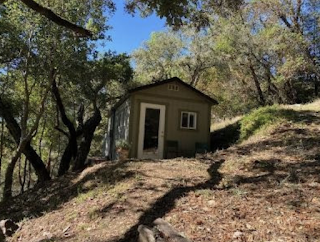
Working for much of his career in a tiny windowed shed behind his farmhouse in West Tisbury, Mass., on Martha’s Vineyard, Mr. McCullough tapped away on a manual 1940 Royal typewriter purchased for $25 in 1965.

“I like the tactile part of it,” he told the Times. “I like rolling the paper and pushing the lever at the end of the line. I like the bell that rings like an old train. … I even like crumpling up pages that don’t work. … I don’t like the idea that technology might fail me, and I don’t like the idea that the words are not really on anything.”

First, the writing house. It's behind his house on Martha's Vineyard, which--okay, we'll never see that kind of environment if we're not rich & famous, but we can envision the writing house. 


From CBS, I learned its dimensions: 8' x 12'. This is slightly smaller than Thoreau's 10' x 15' cabin at Walden Pond, but McCullough wrote there rather than living there. 

It's clearly a working space complete with file cabinets and an honest-to-god typewriter table. Those wings at the side of the table are for holding paper. 

Most important, a typewriter table is the best height for typing, 26" and not the 29" height of most of our desks, including the one on which I'm typing this. A typing table (if I had one) is a little low for typing on a keyboard, but when you're typing on a manual typewriter, that angle allows you to see better and also to press hard enough on the keys with a downward motion.

Source: the only actual, honest-to-goodness writing I've done this summer has been on a manual typewriter, though not a 1940 Royal.This summer has been about process and preparation--think amassing a bibliography and reading--rather than making great progress. 

Here's the place I want to be, though--the one evoked by McCullough's words, which more than these mechanical things are helping me with writing inspiration this morning: 
“People often ask me if I’m working on a book,” he continued. “That’s not how I feel. I feel like I work in a book. It’s like putting myself under a spell. And this spell, if you will, is so real to me that if I have to leave my work for a few days, I have to work myself back into the spell when I come back. It’s almost like hypnosis.”

“Writing history or biography, you must remember that nothing was ever on track,” Mr. McCullough told the Times in 1992. “Things could have gone any way at any point. As soon as you say ‘was,’ it seems to fix an event in the past. But nobody ever lived in the past, only in the present.

“The difference is that it was their present,” he continued. “They were just as alive and full of ambition, fear, hope, all the emotions of life. And just like us, they didn’t know how it would all turn out. The challenge is to get the reader beyond thinking that things had to be the way they turned out and to see the range of possibilities of how things could have been otherwise.”


 P. S. Please forgive me for not commenting, WordPress bloggers. WP is on one of its periodic hate campaigns with me where it will not accept any identity or password, so I will have to make a new one.


Friday, July 08, 2022

There's imposter syndrome, and then there are imposters

 I've been fascinated recently with this article about a writer on the show Grey's Anatomy, who (necessary disclaimer--"allegedly") fabricated a cancer diagnosis and stole other people's experiences as her own as fodder for the show. Link to  Vanity Fair. 

We talk a lot about imposter syndrome--the idea that we're not deserving of the job we have, not worthy to be where we are in our careers, etc. But this is different; it's about an actual imposter, or maybe just someone who lies creatively.

I have only met one of these people in my life (that I know of), but it was memorable. Bear in mind that this happened a long time ago, pre-internet, at a small school that I wasn't teaching at (let's call it Academia U); she wasn't even in the humanities. But I knew her, and we were friends. Let's call her X. 

X had graduated from a top program, which gave her star power to me and to everyone in her department. She had written (co-written) the paper on a particular phenomenon. People sought her out. She was invited to keynote at more than one prestigious conference. Pre-WWW, who could check?

 She frequently told Academia U that it was lucky to get her, and, in fact, would regularly threaten to leave unless her salary was raised. She had job offers, she said. Academia U came through with a raise every time. 

But there was an odd problem when she went up for tenure: the school couldn't locate the publications that she claimed, beyond the famous co-authored one. Well, that was easy. She had mailed a disk with her manuscript (pre-internet, remember), and the disk was corrupted, but it was just about to be published. On another, the editor had gone on vacation and had just neglected to send the final copy to the printers. On another, some editorial intern had made a mistake that delayed publication. All just missteps.

 She had the worst luck, those of us who knew her agreed. All the editors apparently sent letters saying that yes, these were fabulous articles that would be published momentarily. That's not unreasonable: a letter on letterhead saying that a book or article is about to be published often appears in a tenure file. It's not clear to me whether the tenure process at that school in those days required outside reviewers or whether they accepted her manuscript versions (soon to be published, except for her accursed luck) as publications, but she got tenure & promotion.

But there was something else: for me, her dates didn't add up. One time when I went to lunch with her, during which she told me I could be as successful as herself --well, not as successful, but successful for the kind of person I was, I started to get uneasy. The prestigious conference in X city--wasn't that at the same time that she had said she had gone to visit a family member in city Y? If a disk was corrupted, why not send another one? Why wasn't her name showing up in the article index for her discipline, except for that one study? (Yes, I am petty. After that humiliating lunch, I went to the library and checked.) There were other inconsistencies, but when I called her on them later, she brushed them away and always had a ready answer.

Things came to a head when an official document appeared to someone official to have been forged. What! No, X would not do that, we agreed. Stupid government! They must have made a mistake. 

There was no publicity, and no court proceedings. But she quietly left Academia U for another academic job shortly after that. 

I don't know if there's a moral to this story, except that I'm now amazed that it took me so long to add 1 + 1 and get 2 out of it. Is it gullibility, naivete, or stupidity? Or is it simply trust that people are who they say they are and do what they say they do? I also recall being kind of impressed that she could keep so many stories straight for so long.

Do you suppose that this happens in academia more frequently than we think it does? Have you ever encountered an imposter or creative liar?


Friday, June 03, 2022

Service Tennis, or how to put that ball right back across the net

 As new academics, we're taught (or do we just internalize?) the need to make things right.

Or maybe this: as women who are new academics, we're taught (or do we internalize?) the need to make things right. 

  • Draft of some report or document not right? Let me get right on that and rewrite it so that it sparkles, thinking through and addressing its conceptual problems as I do so.
  • Committee work? Sure, I can volunteer.
  • Take notes? No problem.
  • Write a book review? Let me at it.
  • Review an article or book manuscript? Sure, why not? 

But possibly inspired by some of the feelings that the article Maya recommended in the comments of the last post and also by rereading a few of my self-directed come to Jesus talks about doing too much service, this year has brought a change.

  • Draft of some report or document not right? Well, it's a collective draft. I fix what I can't live with and figure "many hands make light work" for correcting the rest. Could I make it better by spending more hours on it? Yes. Should I make it better by spending more hours on it? That's the real question.
  • Committee work? Is this a committee that has some actual use for what I bring to the table, or am I warming a chair? If the latter, bye.
  • Take notes? Yes, if no one else steps up. I've done enough volunteering to do this for an academic lifetime. Let's start acting as if this takes a village, which it does, and the same people don't have to do this always.
  • Write a book review? Never again, honestly. Marley's ghost is still haunting me, and this is probably the last one I will volunteer to do. I'd rather recommend a more junior scholar who can benefit from the experience, and it's better for them, too.
    • Also, what's with the new trend of sending ebooks or a link where you have to sign up for a site, etc., to get the book on a time-limited basis? Ninety percent of the value to you as a scholar doing a book review is that you get to read and have a copy of the actual book. The last thing I need is more hours of screen reading where it's tricky to mark up the copy with points you'd like to make.
  • Review an article or book manuscript? It depends. Is this helpful in terms of alerting me to new trends in research as well as being a service to the profession? A few years ago, an insidious voice started inserting itself whenever I reviewed something. You could be writing right now, it would say. You only have X number of productive hours in a day. Is this how you want to spend your time? This benefits others, which is laudable. Does it benefit you, as well? Isn't that also a laudable goal? 

I thought of this today when I received back a draft of something I'd sent to a committee, of which the point person mentioned that some changes would be good and that the other point person was on vacation. In the old days--and this was my first impulse--I'd have spent time making the changes and then sent it back.

Today, I lobbed it right back across the net and said "send it back to me once you've made the changes. Have a great day!"

 If you think of all this as your responsibility, it sounds selfish.

If you think of it as a collaborative game, you can hit that ball right back across the net and see it as a win for everyone.


Edited to add: see “Tips to Reclaim Your Time” by Leslie K. Wang over at IHE. https://www.insidehighered.com/blogs/university-venus/tips-reclaim-your-time


Monday, May 16, 2022

NYT: "My College Students are Not Okay" by Jonathan Malesic

 First, here's the article: https://www.nytimes.com/2022/05/13/opinion/college-university-remote-pandemic.html

 The TL;dr on this is that students are tired--exhausted, even--and disengaged. When they go to class, they won't speak up, as if they're watching you on Zoom. 

Based on an N of 1 (me) over the past two years, I agree on some things Malesic's saying, but not all.  

  • First of all, we need to separate out Zoom classes, in-person classes, and designed-to-be-online and asynchronous classes. These are different animals. I only taught a few Zoom classes, and they seemed to work pretty well. 
  • The in-person classes? I guess I didn't post a lot about them, but honestly, they were great. We wore masks but it worked fine (worked a treat, as the Brits say). Was it their energy, being glad to be back, that made the energy in that classroom? Was it partly me (ditto)? Was it the approximately 1.5 times the effort that I put into those classes? More effort doesn't always result in a better class experience (shudders in memories of classes past), but maybe this time it helped?
  • Online classes: these take 2 x the effort of an in-person class, and this semester especially I'd estimate that my time was spent about 80% on teaching and the remaining 10% each on research and service. This isn't ideal and is definitely not what my contract calls for, but it felt hugely necessary. Some thoughts: 
    • In an in-person class, you know how sometimes you feel as though you are emotionally lifting them, encouraging them to speak, etc. and are wiped out at the end of the class, and at other times you might be a little tired or whatever but their energy helps you? This semester, I poured so much energy and time into teaching that it wore me out--but then they started giving back, even though it was an online class--more & better responses, coming to office hours (via Zoom), etc. 
    • And they deserve the credit for coming through so well--they really do. To borrow a piece from Bardiac's post, they really did exceed expectations, by and large; those weren't "well, it's COVID so it's an A" grades at all. They know what the expectations for writing are, and some of them complain mightily about having to write in complete sentences, etc., at first. It's a kind of "Do you know who I am?" attitude that sometimes afflicts seniors and majors who claim they haven't been called to account for their writing before, but then they learn and it's a pleasure to see the change for the better.
    • While it's doubtless true, as some of Malesic's interviewees say, that you can't teach some courses online (hello, lab science!), I don't teach lab science and would say that some things can be taught & discussed just fine online. I'd say in any given class about 5-10% were "disengaged" in Malesic's sense.
    • I just looked at course evals, and the students seem to have gotten a lot out of the classes, so there's that. 

But yes, to Malesic's point: more requests for extensions than usual, etc. do point to their being exhausted and burned out. 

And so are we, aren't we?


Monday, May 09, 2022

The teacher I want to be

 First of all, I do love teaching. 

Second, I believe in flexibility, and my syllabus has all kinds of alternative assignments, escape clauses, and get out of jail free extensions built into it--all stated right up front, with no need to have class privilege to know that they're available. I talk about them. They're in the syllabus. I email students about them, if they seem not to know.

For a lot of years--decades, even--this has been enough. If a student tries, it's hard not to succeed if they put any effort at all into it, because there's always another way. They may not get the grade that they think their writing deserves, because they insist that I'm the only teacher who's ever told them about picayune details like writing in complete sentences; however, they usually come around once we've met for a few times and gone over their papers. But in my classes, there other ways to succeed.

Yet it's been a tough semester for us all. Contra academic conferences, which are so over COVID, my students are getting sick regularly despite being vaxxed, and I've made a lot of allowances for that. I've responded to emails on weekends. I've been available. I've given feedback. I've met with them. I've notified them through the course space if they didn't turn in papers (online classes--you kind of have to do this). I have put in more hours on teaching this semester than in any recent semester I can remember.

And now, a minute and a half before grades are due, students who haven't checked into the course space for literally months want to turn in assignments that they had ignored for said months. Or they've skipped a bunch of assignments but are emailing "I need an A." Or they start rules-lawyering over some minor point, which is hard to do given the really specific details in the syllabus. Or “I have a lot of work in my other [implied: more important] classes and am handing this in late.”

And with all the "take it easy on your students; COVID, etc." directives being issued, it's hard to say no without seeming like a monster.

It's probably for this reason that I'm finding this really dispiriting, even though I know I shouldn't take it personally. It's like some kind of fall from grace, or a fall from the kind of teacher I thought I was and want to be. This didn't happen in the Before Times, or happen as much, and it didn't bother me when it did because I could just point to the numbers. 

I don't want to be that tough old rounder who rejoices in saying no, but it's getting harder to keep that store of goodwill and enthusiasm flowing and to be the kind of teacher I want to be.


Monday, April 18, 2022

How long is this semester? Groundhog Day long, that's what.

  • Like a good portion of the rest of the country, Northern Clime is getting snow. In April. Every day. Snow. What is it Bill Murray says? "It's going to be cold, and it's going to be gray, and it's going to last for the rest of your life." Yeah, what he said. 
  • Tulips are coming up, but they're saying "nuh-uh, not going to bloom when we're just going to freeze to death." 
  • I am playing whack-a-mole with our LMS. When I see that someone's turned in one of the minor full-credit assignments, I go in and give it comments immediately, just so I can see it disappear from the ever-lengthening sidebar list of things to grade. 
  • I gave a conference paper (the conference had sensibly moved online), and rediscovered (1) how stressful it is and (2) the feeling of giddy elation when it's over. It's the old story of hitting yourself in the head: it feels so good when it stops. 
  • The mask thing is going pretty well, though. Most places I go--that is, the grocery store--there's a good third of the people who are masked. If you think about it, how much attention did we pay to people's faces before the pandemic? Not a lot, and it's the same now; I barely look at them and vice versa. Nobody's said anything to me about it, and everyone seems pretty chill. 
  • I'm ready if someone does say something, though. Here's my projected response: "Merry Christmas!" Cheerful enough to be inoffensive, and strange enough to make them give me a wide berth in case I am unhinged, and, in this part of the country, armed. 
  • It's hard to get back to writing and thinking, although the conference paper proved that I could do it, so I guess it's time to get back to it. 
  • Updated to add: a Florida judge just voided the mask mandate on planes for bonkers reasons ("masks don't do anything"). This is bad for so many reasons (children, immunocompromised people, and, oh, by the way, the rest of us who don't want to get any flavor of COVID). From an academic perspective, people on Twitter are now fretting about flying to conferences. Not to harp on the same old idea, but you know how you can't get COVID if you're at a conference? Through a Zoom screen. We are all supposed to be throwing praise parades for the in-person conferences, but this is a risk that just got riskier, not that anyone is paying attention.
  • Another update: “who needs a mask? Covid is over completely, so definitely not me” from Megan McArdle (https://notofgeneralinterest.blogspot.com/search?q=Megan+mcardle ) conservative columnist and author of helpful advice like “if you’re not rich, perhaps you should consult your broker” and “old people get poor and die—get over it” https://www.washingtonpost.com/opinions/2022/04/19/mask-mandate-flights-federal-judge-cdc-this-is-the-right-moment/?itid=hp_opinions

Friday, April 08, 2022

Random Bullets of April


  •  COVID, now with new and improved Omicron 2.0, is still flourishing here and elsewhere. British Airways had their flight crews take off masks, and oh, look, their COVID rates rose.  I'm still wearing a mask, and at least a third of the people I see at the grocery store are, too. 
  • I'm sure you all saw how UCLA posted a job offering with all the usual requirements, including 5 references, for a professorship for which you would be paid . . . nothing. This was in the sciences, and it probably had something to do with teaching for glory--er, faculty affiliation--when you already make lots of $ on grants, but still. Are we there yet at the English Department of the Future
  •  Speaking of fancy schools doing dubious things, if you haven't read Rachel Aviv's New Yorker investigation of how U Penn treated one of its students, Mackenzie Fierceton,  go read it; it's excellent. This follows a Chronicle of Higher Ed account that takes a skeptical view of her story; Aviv's account has a more complete and sympathetic version.
  • Twitter is doing its usual blend of genuinely useful information and theory and contemporary culture fight-fests over stuff where I have no idea what they're talking about. 
  • In other news, I now believe that people should be required to get signed permission slips from all their neighbors before they put up outdoor wind chimes. 
  • Friday night, and still grading--how about you? It's that time of year when grading is kind of like bailing out a leaky rowboat: just when you think you've got one hole plugged up and the water in the boat goes down, another one springs up. 

Now, I'm not complaining about the fact of having to grade. They're our students, and they deserve to have comments. I've never learned the trick of having them learn to love grades that are simply checks on a rubric, even though I've caved in and made some beautiful rubrics this semester. The comments help them, if they read them, and that's something I can't control. 

It's the time  that grading takes. I just don't understand how it can take so much time, even with all my little timer tricks. It just . . . does. 


Monday, March 21, 2022

Random bullets of "March? Already?"

  •  

    First, some writing house inspiration, courtesy of Wendell "I don't need a computer" Berry: "Hidden in the woods on a slope above the Kentucky River, just south of the Ohio border, is a twelve-by-sixteen-foot cabin with a long front porch.. . .The camp has no plumbing or electricity. Half a dozen well-sharpened pencils were lined up on the worktable, alongside small stacks of paper. On top of one stack was a note Berry had made, and crossed out, about Marianne Moore’s poem “What Are Years?” Above a small safe, curling photographs were taped to a wall: Wallace Stegner, Ernest Gaines, Donald Hall and Jane Kenyon, Thomas Merton." My writing house also is 12 x 16, so Wendell and I are obviously destined to be famous authors together. 
  • So much teaching. So much grading. So much time spent on both.  I want to channel Winston Churchill here: "Never in the history of mankind has so much time been spent by one person in the attempt to create a resource appreciated by so few." Written lectures, video lectures, responding to their posts, grading: I thought I had made it up that online teaching takes 2x as much work as in-person, but this year, on an N of 1 (me), I can confirm that it does.
  •  In an extremely ill-advised moment, even after vowing never to do another one, I said I would do a book review last year. The book is good, but very, very, very long. I read it last summer and never wrote it up, with the result that I now have to read it again to write the review. Spouse says I have been dragging it around with me for a year like Marley's chains in "A Christmas Carol," and he's not wrong. 
  • Now that everything's going back to maskless in-person events (even with Omicron 2.0 peeking around the corner), it's back to the irritating calculus of whether to burn an entire day traveling to campus and getting no work done to support a colleague doing a presentation. There were two presentations today I would have happily attended if they were on Zoom. They were in person, and I had a lot of work to do (travel burns the whole day), so I missed both of them. 
  • Gwinne has an interesting post about the amount of work we do. I'd break that down even further into categories:
    • Work that we are paid to do that's interesting but takes far too much time to do it right (teaching). 
    • Work that's invisible and that no one cares about unless it doesn't get done (service, administration).
    • Work that we want to do in terms of research but that gets pushed out by #1 & #2.
    • Work that we at some point agreed to do and that we can't seem get done, like Marley's chains up there. 
    • Work that we are harried into on someone else's schedule because however much lip service they pay to things being collaborative, etc., the only schedule they actually pay attention to is their own. 
  • I'm still wearing a mask to the grocery store & everything, because why not? No one seems to mind.
 And with that I will close for now, leaving you with these words: "“I wear the chain I forged in life  . . . I made it link by link, and yard by yard; I girded it on of my own free will, and of my own free will I wore it.”

Saturday, January 22, 2022

A Writing Inspiration Twofer: George Saunders's Writing Practice AND his Writing House

 I was recently scrolling through Shedworking (https://www.shedworking.co.uk/), a UK* site for hopes and dreams about writing houses, when I saw this two-parter about the novelist, short-story writer, and critic George Saunders (Lincoln in the Bardo is his award-winning novel).


Here, from Shedworking, is a picture of his writing house in California. 

(Insert pause here while you sigh with delight.)

And here, from the New York Times* via Shedworking, is a bit about his writing practice:

"Saunders writes in a shed across the driveway from his house, where we sat for a couple hours one morning while his two yellow labs nosed around outside the door. There’s the desk and a sofa and a table stacked with books that he has been researching for his next project."

And this from The Guardian: 

"His first newsletter includes a photograph of his solitary writing shed in the woods behind the house in Corralitos. His wife, Paula, bought it for him a few years ago, and it’s a writer’s dream. No fences or distant rooftops. Just the shed surrounded by trees and the shadows of trees. Writers’ rooms are usually reclusive. But Saunders is using his to host a writing community. Why does he care? “I suppose one of the things that a person worries about along the way is, ‘Does this really matter?’”

  “To go up in that shed every day was so helpful.” It was, he says, a way of saying: “‘I can’t control the world.’"

And finally, from his new substack at https://georgesaunders.substack.com/p/welcome-to-story-club, which sounds very much worth the $6 a month:  

"I’d come flying/stumbling down at the end of the day from a little writing shed I have up on the hillside in Corralitos, California, feeling, not that I’d “taken a break from” the current difficulties, but that I’d, well, girded up my loins for a deeper, less fearful engagement with the world."  

I am tempted to join the Story Club substack, not only for the pleasure of learning about writing short stories from a contemporary master at the top of his game but also in hopes that we will see interiors of the writing house.

Digression 1:  The Brits take their garden sheds/writing houses very seriously and even have an award for them.

Digression 2: From the New York Times piece, I learned that Saunders has the same guilty pleasure that I do--reading Vanity Fair on a plane. Famous genius writers and obscure bloggers--they're so alike!


Saturday, January 08, 2022

Random Bullets of MLA 2022

 It's become a (semi? quasi?) annual tradition to post from MLA, and although I skipped last year, here's what it looks like in this Year of Our Covid 2022.

  • MLA was not virtual for a long time, but then the MLA gods started seeing the same astronomical COVID omicron spikes as the rest of us and relented: in-person panels could go virtual if they announced this by December XX. When my panel chair announced this and asked us our opinion, it took me less than 4 minutes to blast a reply-all saying "Please, let's do virtual, I beg of you, because there is a major pandemic" or words to that effect. We went virtual, and hooray! 
  • I have been grateful about this every single day, and seeing 1700 to 2500 flights a day canceled because of terrible weather has increased my gratitude exponentially. I've spent enough time sitting on floors or scrabbling for outlets or eating stale sandwiches in SLC or MSP or DTW, or sitting on hold with airlines, in the best of times and felt I could skip that level of misery and anxiety this year once we went virtual.
  • Unofficially, I've heard that about 80% of the panels are now virtual. Some are in person, and some have chosen to defer their panels until next year.
  • What's the experience like? Fantastic! I'm attending lots of sessions, hearing smart people talk about interesting research, and really enjoying it. It's shaking up my brain, in a good way, and giving me lots to think about--and isn't that the point? And I'm buying more panelists' books now that I don't have to spend the money on travel--which Northern Clime doesn't reimburse.
  • Better still, since we're all used to Zoom now, we know enough to mute sound and video, to do the little applause hands at the end, to share screen, and all the rest. And with Zoom, I can get up and pace around the room rather than sitting in an overheated conference room pinching myself to stay awake; it's much easier to listen, learn, and take notes when you have freedom of movement. 
  • How can I say this? People are . . . better speakers, somehow, with Zoom. Everyone can hear the speaker--there's no harrumphing about being too good to need the microphone--and the transitions between speakers are really smooth, with no "my PowerPoint won't load" drama during which the audience kills time. And people are really prepared to keep within the time limits. Conversation is lively in the Q & A, and the rambling and posturing that sometimes mars sessions is kept to a minimum.
  • There's always a bit of performative mourning about not being in person, not being able to spill out into the hall and continue the conversation there. Yet those conversations aren't always as inclusive as the conversations in the sessions, since only a few would be invited to join those hallway conversations. You can find community at a conference, they say, but there's also the isolation of being excluded from a group, of eating that sad, overpriced room service salad at the end of the day if you couldn't find dinner companions. At home, that clubbiness isn't being played out before your eyes. 
  • At the end of the conference (tomorrow), there won't be a solid day of travel with the inevitable cold that I always catch; in 2022, that would come with added excitement--flight delays! omicron! swords and fisticuffs on planes!--that I can also do without. Instead, I can take a deep breath and get ready for spring semester.

We'll go back to in-person conferences, surely, so this little golden age of virtual conference attendance won't last. But for now, I'll enjoy virtual MLA to the fullest and try to look downcast as everyone laments the loss of the in-person version. 

Edited to add: 

  • There seems to be less session-hopping on Zoom, and people are on time—but if you’re a couple minutes late, you can still get into the Zoom room without fuss and embarrassment. There’s no knocking on a locked door, or turning up at a session only to find the room full so you can’t get in to hear the speaker. This happens especially at celebrity panels—there was an Adrienne Rich panel at which she appeared years ago where there was an impressive overflow into the hall and no way to hear her—but it happens at other ones, too.
  • I do like in-person conferences and being able to talk to people, go out to dinner, see the book exhibit, etc., but virtual is just fine, too.

Previous MLA posts: 

Other MLA Conference Posts:

Wednesday, December 22, 2021

Random bullets of the "Is COVID over yet?" semester

  • Answer: Ha! not even close to over. On the other hand, we can now get vaxxed AND boosted AND have good masks available, though few or no rapid tests. 
  • Also good: as Omicron spikes & Washington, D. C., declares a state of COVID emergency or whatever, MLA is allowing previously in-person panels to be remote. Most of us are grateful.
  • But remember Miranda Priestly in The Devil Wears Prada, saying "Please--it's just drizzling" as a hurricane raged outside and she demanded a helicopter to take her back to NYC or heads would roll because how dare a natural event keep her from something to which she was entitled? Yeah, some of the academics on Twitter who were all "Pandemic? what pandemic?" are disgruntled, and no, I don't care. It's a pandemic. People are dying. Hospitals are full.  Even the NHL canceled, for God's sake. MLA powers that be--Paula Krebs and the rest--if you're out there, thank you!
  • Teaching this semester (in person and online) was fine. It was really hard work but really rewarding, if that makes sense. I know they learned things, and I think they had fun doing it. 
  • Writing: not much to report in that sector. I'd say I spent about 80% of my time on teaching this semester, no lie. But I'm getting glimmerings of wanting to work on a new project and have ordered books.

Sunday, October 31, 2021

RBOC and some writing inspiration

  •  First, some writing inspiration from Paul McCartney in The New Yorker: "As McCartney recalls, “George would say, ‘Be here at ten, tune up, have a cup of tea.’ At ten-thirty you’d start.” Two songs were recorded by lunch, and often two more afterward. “Once you get into that little routine, it’s hard, but then you enjoy it. It’s a very good way to work. Because suddenly at the end of every day you’ve got four songs.” This puts Sir Paul in the "write every day" camp, and I am here for it. At the end of the day you've got four songs; at the end of the pomodoro, you've at least got more words than you did at the beginning.
  • More writing inspiration, but very vague, I'm afraid: a writer recently posted that he gets up really early to write not despite his being too tired but BECAUSE of it. The fatigue, etc. helps him to stop dancing around and actually get down to writing, because it turns off his inner editor. I saw this and shouted "this is me!" to the cats, except that for me 9 p.m. is the witching hour when the inhibitions put out a "gone to lunch" sign and I can settle into writing. I am still doggedly trying to write in the morning because at 9 p.m. on a teaching day, I am really too tired for any work, but morning writing is never going to be the same as those quiet evening hours.
  • Seeing pictures of modern writing houses, I'm struck by how they seem to come in two styles: stuffed to the gills with mementos, children's pictures, artwork, and various cozy knicknacks; and bare in a pure minimalist style, with just fancy chairs, a laptop, a couple of artbooks, and some inspirational "live laugh love" thingy on the wall, with nary a functional file cabinet in sight. The point is that they have a definite aesthetic. Mine does not have an aesthetic, unless "office for reading and writing" is an aesthetic. To my mind it's the most beautiful (because it's roomy and mine and I love it), but I was ridiculously fretting about its not making A Coherent Aesthetic Statement and that I was somehow shortchanging it because I wasn't making it beautiful enough. Spouse wisely said "it's for your work, not theirs. Work is your aesthetic."
  • My double life of pretending regret about not going to conferences and that there is no COVID or that travel is not a challenge, like the rest of the academic conference world, is making me a bit irritable privately, though I'm still maintaining the public facade. 
  • Was Halloween always such a big deal? When I was a kid, we dressed up and went trick-or-treating on October 31, usually with our parents, but they didn't dress up and the houses were just regular houses, not decorated. Around here everything is Halloween for all of October, and a lot of people decorate and dress up. Was it always this way? Or do we just want more holidays now (not a bad thing)? 

Friday, October 29, 2021

If a crazy donor put up $200M to build a windowless dorm, with tiny rooms, would your university do it?


 UCSB says, "heck, yes!" https://www.independent.com/2021/10/28/architect-resigns-in-protest-over-ucsb-mega-dorm/

Short version: "97-year-old billionaire-investor turned amateur-architect Charles Munger, who donated $200 million toward the project with the condition that his blueprints be followed exactly."

These include the following:

  •  2 exits for a building to hold 4500 students.
  • 1 bathroom per 8 rooms, which is bad for all kinds of reasons I leave to your imagination.
  • Did I mention NO WINDOWS? In a place with a view of the ocean? 
  • And that he's paying 200M but UCSB will shell out 1.5 billion to create & maintain this monstrosity?

When he's not reaching into the past for all kinds of inhumane social experiments for his inspiration, Munger apparently makes this offer to various campuses, and some have accepted (Michigan? Not clear.).

 As is unfortunately typical of some university governance processes when money is involved, this was apparently rammed through without any discussion. 

The consulting architect, Dennis McFadden, clearly a man of principle, has quit, because “in the nearly fifteen years I served as a consulting architect to the DRC, no project was brought before the committee that is larger, more transformational, and potentially more destructive to the campus as a place than Munger Hall.” 

Let's recap: take students stressed out by a year of COVID. Warehouse them like lab rats and force them to interact. Provide not enough bathrooms. And fire drills in that place (how did this ever pass a fire code?) will be a real treat, with 4500 students streaming out the two doors at 2 a.m., unless prank fire-alarm pulling has vastly changed over the decades. 

Wasn't there a lab rat experiment that proved what a bad idea cramming people into a windowless space could be?

And when sleep-deprived students show up in our classes, guess who will get to bear the secondary consequences?

 Nothing could go wrong here, nothing at all.  

P. S. With its steady drumbeat of "no offices for professors is the great future that awaits us all," I'm surprised that CHE isn't cheerleading this effort.