Wednesday, December 07, 2011

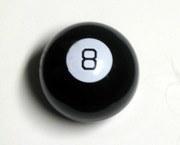
The Magic 8-Ball approach to student questions


"When will you give us back our papers?"

When they are graded.


"Will you give them back to us at the next class?"

Cannot predict now.

"What did you think of my paper in particular?"

Ask again later.

"Will we get them back before the final?"

All signs point to yes.


"Can I email you multiple times asking you 'what if?' scenarios about my grade and following up with demands for more calculations on your part?"

My reply is no.


"Will you be annoyed if I try to engage you in such an email exchange?"

Most likely.


"Can I ask you for an exact accounting of my grade after class when you are trying to get out of the room before the next class?"

Don't count on it.


"Am I going to pass this class if I don't make it to the final?"

Better not tell you now.

Saturday, December 03, 2011

End of semester syndrome

I think I have end of semester syndrome. Now, I am not a doctor, although I play one for 16 weeks each semester, but here are the symptoms:

  • A version of what Ms. Mentor calls October--"exploding head month"--in which although you've been working diligently since August, you realize that you have not accomplished nearly enough, and in your mind that becomes "nothing at all," and your head explodes with the knowledge of what you still have to do.
  • Also causing your head to explode: the realization that a whole bunch of deadlines, including MLA presentations, are zooming toward you at the speed of light.
  • A twinge of envy: assuming that all your colleagues have accomplished far more than you have in the past semester--have written more, have taught more exciting classes, and have generally outpaced you in every way.
  • Happiness that classes will soon be over. No more prep! No more grading! No more writing new assignments! No more figuring out how to teach yet one more brand-new story!
  • Sadness that classes will soon be over. You've worked really hard, and you've been with these students for all these weeks, and you're confident that at least some of them have learned something, and it's now all ending. In some way, you know you will miss the familiar routine of going in to teach them, and you will probably miss seeing some of them, too.
  • A sinking feeling upon realizing that you now have to get ready to do the whole thing all over again in the spring. You have to think about courses you've never taught before, and dream up assignments, and carry everyone along on your back with your enthusiasm until their enthusiasm for the class catches fire, assuming that it does.
  • And did I mention getting ready for the holidays?

Symptoms may also include soundtracks. Here is the soundtrack that accompanies my particular End of Semester Syndrome; yours may vary: http://www.youtube.com/watch?v=4ruFfxlMsbY
Am I the only patient with ESS? What are your symptoms?

Wednesday, November 30, 2011

No outrage, no deep thoughts--just writing

I know it seems all tech tips and web-o-matic writing inspiration (but it does work) around here lately. The thing is, I've been spending time on the Big Project, and to do that, I have to talk to myself.

Talking to myself is taking the form of a research journal or writing journal in which I argue with myself--"Do you want to put in that part? Why not?"--that sort of thing. I write it out, and then I answer my objections, and then eventually I go away and write. A few bullets of this week:
  • After stuffing one already published piece into this new material I'm writing, I figured out that one chapter really needed to be two. No more stuffing, and a more coherent chapter--or at least I hope so.
  • My own NaNoWriMo this month was to try to get on 750words.com every day and write something. Sometimes I'd spend all day editing and rewriting, but when evening came, I started itching to get to that clean expanse of the site and type something. If you don't write, you can't edit and make what you wrote better, and even if what came out was repetitious, it worked: the repeated version was usually better and made the editing task easier the next day.
  • Writing this way made me realize again that writing is discovery. If I was writing in the research journal file or at 750words.com, I kept thinking of things as I wrote. I know--that's an old saw about writing, but it hadn't been working as well lately.
  • The problem with writing is that academics have to read before they can write: we can't spin webs like a spider unless we have the material already packed away somewhere from someone else's words. Unlike creative writers, we're spiders with a backpack of that kind of material, and once the backpack is empty, we have to fill it back up again no matter how much we might want to write.
  • I was so committed to this that I graded all the papers, tests, etc. at the very beginning of Thanksgiving break--I even felt like doing it then--so that I wouldn't have to think about grading or classes for the whole break.

    This isn't the most exciting post, but I didn't want you think this was becoming Pogue's Posts over here.
  • Thursday, November 24, 2011

    Happy Thanksgiving! (and an iMessage tech tip)

    Giving thanks for better weather, family on the way, and a reasonably stress-free day so far. Happy Thanksgiving, everyone.

    And the tech tip: if you have an iPhone, iPad, etc. and have been trying to use iMessage (free text messaging among Apple products) without success (like thousands of other frustrated users), try adding 8.8.8.8 as a DNS server number.

    To do this:

    1. Go to Settings -> Wi-Fi -> (name of your network) and click on the blue arrow. When the screen showing the details of your network opens up, look at the line that says DNS.

    2. You will see one or more numbers that look like this: 89.87.61 (or whatever). You might have one or more than one sequence of numbers like this.

    3. Add a comma to the last number and type in 8.8.8.8 and exit the screen. Example: 123.333.33, 89.87.61, 8.8.8.8

    Some sites say to erase the old DNS numbers, but I just added this one (8.8.8.8) to the string that was there, and now iMessage works.

    http://appletoolbox.com/2011/10/ios-5-imessage-not-working-%E2%80%93-how-to-fix/

    Wednesday, November 23, 2011

    Francis Ford Coppola on writing

    http://www.npr.org/templates/transcript/transcript.php?storyId=140870590

    UNIDENTIFIED MAN #1: The question I wanted to ask is, actually, if you could talk about your writing process, your habit, sort of what's a daily writing day like for you.

    COPPOLA: Well, the thing about writing is if you really try, if you do it every day, and you put in your time, you get better. I don't know if there's a - I think with acting that's possible, too, but writing is something that if you really plug away at it, you can get better.

    The important thing is: A, choose the time that's good for you. For me, it's early morning because I wake up, and I'm fresh, and I sit in my place. I look out the window, and I have coffee, and no one's gotten up yet or called me or hurt my feelings.

    (SOUNDBITE OF LAUGHTER)

    COPPOLA: It's very important that your feelings are very, sort of, just stable. You know, you don't want to have a heartache when you're trying to go fly on some adventure of writing. At any rate, it's very important for the young writer to, when you finish the six, seven, eight pages, to turn them over and don't look at them again, because I believe there is a hormone that is injected in the blood of the young writer that makes him hate everything he has just written.

    And so just don't read it. And then when you finally have done it over the, you know, 30 days or how many days so that your stack of pages is in the 80s or something, then - and you feel you have it at some completion, then sit down and read it, and you'll find that your reaction will be very different because you will have a little distance.

    And you realize that the first 10 pages that you would have just torn up and rewritten, which is to say never go back. If you don't read it, you're not going back and rewriting anything at first, because you don't know yet. And maybe you're just going to cut those 10 pages out, and they're not even going to be in it. So you would have been rewriting something that's not even in the piece.

    So give yourself that chance to put together the, you know, 80, 90 pages of a draft and then read it very, at a - you know, in a nice little ceremony, where you're comfortable, and you read it and make good notes on it, what you liked, what touched you, what moved you, what's a possible way, and then you go about on a rewrite.

    And I'll rewrite a script a trillion times. So rewriting is just the middle name of writing.

    [Note: Coppola wrote the script for Patton, for which he won an Oscar, when he was 24 years old.]

    Monday, November 21, 2011

    A "keep your chin up" post, comfort food edition

    If you read the news, it's easy to get discouraged. On the national side of things, this means one party trying to "Kill the Poor" and heap benefits on the rich beyond all reason, with some candidates so venal that they make Richard Nixon look good. On the university side, it means the events at Penn State and the police attack on students at U C Davis. Last year was the 40th anniversary of the shootings at Kent State. I hope we're not headed back in that direction.

    So, to keep my chin up, and yours, I'm going to offer you some comfort food: a recipe for cranberry-apple cobbler (or apple brown betty, apple crisp, or apple crumble--name varies regionally).

    1. First, get out your apple corer, if you have one (they are fabulous devices) and peel and core about 5-6 reasonably tart apples: McIntosh, Cortland, Honey Crisp, Wealthy, Northern Spy, or Granny Smith. Use all the same kind of apple, though; the cobbler will taste better. If you use sweeter varieties than these, use some lemon juice put the juice of 1/2 to 1 lemon in the recipe, depending on the sweetness of the apples.

    Cut the cored and sliced apples in quarters so that the slices are small.

    2. Preheat the oven to about 400 degrees and get out a pan, the size you'd use for brownies or a one-layer cake--about 8 x 11." Butter the pan.

    3. Put the apples in the pan along with about a cup of fresh cranberries. Combine 1 c. sugar and 1 tsp. cinnamon in a bowl and pour it over the apples and cranberries. Toss this together with the fruit so everything is coated with the cinnamon-sugar mixture.

    4. In another bowl, cut together with a pastry cutter or knives: 1 stick (i.e., 1/2 cup) of butter, 2/3 c. brown sugar, 2/3 c. rolled oats, 1/3 c. flour.

    5. Spread this crumble mixture over the top of the apples and bake for about 35 minutes, until the fruit bubbles along the sides and the top is browned.

    This is good served warm with ice cream and also just by itself.

    There, don't you feel better now? It sure helped me.

    Wednesday, November 16, 2011

    Deep silliness at the Chronicle: banning all but ebooks


    Just in time for a little Thanksgiving levity, The Chronicle publishes an article so deeply silly that it'll do your heart good: "In the 21st-Century University, Let's Ban (Paper) Books". The credits line lists some books that the author has written, including one on our old friend the "digital native," but I'm having a hard time believing that he's ever read any.

    First of all, the "digital natives" will have to be "weaned" off physical books, because . . . well, because otherwise how will this guy make any money? they won't be being all modern and 21st century and such. I always thought if technology made life easier, students would use it, because they're rational beings. But if they use physical books because books serve their purposes better? Now, that's just wicked stubborn, and those books have to be taken away, like pacifiers, for their own good.

    Leaving aside the issue of paper versus e-form, what about content? Don't worry:
    Much of what students need to study is already in the public domain and can easily, in instances where it hasn't already been done, be converted to electronic form. Most contemporary works exist electronically, as do a huge number of historical books and documents. This would be an incentive to scan more of them.
    So copyright is no problem? These books are free? "Much" is in the public domain? Well, all right, then! Just point me to the planet where this is true, please.

    What about our books? No worries there, either: "Professors would have a limited time in which to convert their personal libraries to all-digital formats, using student helpers who would also record the professors' marginal notes." I love this--"limited time." What happens then? Does Oskar Werner come in and incinerate the rest after the "limited time"? Has this person ever worked at a university where even getting the TPS reports in on time is a major challenge and subject to faculty complaints? Oh, and who's paying for all these student helpers and scanning? Universities in the grip of, in Roxie's phrase, "Excellence Without Money"?

    Just in case you haven't got the point yet, there's a rousing scolding waiting for you in the conclusion:
    The idea of having one's own personal library of physical books, so useful in earlier times, is no longer worth passing on to our students. ...Academics, researchers, and particularly teachers need to move to the tools of the future. Artifacts belong in museums, not in our institutions of higher learning.
    I could tell you what I'd write on a student paper that used (1) sweeping generalizations, (2) illogical leaps of reasoning, (3) irrational and pointless abuse of a perfectly reasonable technology--paper--as "old" and useless, and (4) a complete lack of evidence for the conclusions, but I guess I'd better get busy scanning my notes while I still can.

    Saturday, November 12, 2011

    Cast a cold eye

    While I admire what Historiann's doing with her roundup of "What's the matter with higher education?" posts in response to Anthony Grafton's piece, I just don't have anything useful to contribute and so will look forward to the posts. Roxie, Notorious Ph.D., Dr. Crazy, and others already have some great posts up in response, and there'll be more.

    My short take would be that it's a resources divide: being starved of money is forcing public and private universities to face compromising either their educational mission or their existence as an institution. It's a mirroring of the gap between the 99% and the 1% all over again. I'm especially struck by this:
    Americans, as Malcolm Harris recently pointed out, now owe almost a trillion dollars in student loans, more than they owe in credit card debt. Student debt, he explained, “is an exceptionally punishing kind to have. Not only is it inescapable through bankruptcy, but student loans have no expiration date and collectors can garnish wages, social security payments, and even unemployment benefits.” The burden is distributed by the reverse of the Matthew principle: to him who hath not, no one gives anything.
    . As one student with $200,000 in student debt put it in the New York Times not long ago, it's like graduating with a house on your back, but a house that you can't live in. If you marry, you saddle the person you love with this debt. You put your life on hold to pay it back, which may be never on the wages you can earn. There's something profoundly wrong with this system.

    So. In other news, and to push down the previous post, today's the day I cast a cold eye on all I've written so far on the big project to see where everything is going, if it is indeed going at all. When I started this post, that's what I thought I was casting the cold eye on, but now I see it's not the only thing that needs scrutiny.

    Friday, November 11, 2011

    Short link post on Penn State news

    Update 11.22.11:Huffington Post today reports that the mother of Victim 1 (see story below) was dissuaded from reporting by

    The principal of the school, Karen Probst, a woman.
    The school counselor, also a woman.

    Mother 1 wanted to call the police immediately, and that's when she was given the "Mr. Heart of Gold" speech. By the principal. And the counselor. Two women.

    It's not about gender here. Protecting power is about protecting power.

    http://www.huffingtonpost.com/2011/11/22/penn-state-scandal-jerry-sandusky-victim-mother_n_1108979.html?page=2
    ........

    I am horrified, like everyone else, about the sexual abuse news from Penn State. And can we PLEASE stop calling it a "sex scandal"? "Scandal" implies some sort of delicious gossip about celebrities; this is just horrifying. And "sex" implies consent. This was not "sex" with consent but the rape of children. Go read these powerful posts right now:
    One message is pretty clear, and it's an old message: Power consolidates and protects itself, even at the risk of missing a heinous crime; and those who want to challenge that culture are dissuaded from doing so, sometimes forcefully and sometimes by a more subtle degree of intimidation. Buried deep in one article about the courageous boy and his mother who came forward is this:
    Increasingly worried about the boy's behavior, including his reaction to the phone calls from Sandusky, Gillum said the victim's mother asked school officials to help identify the problem. Gillum said the boy eventually told a school official that "there was an issue" with Sandusky, although the boy declined to elaborate.Gillum said a school official relayed the information to the boy's mother in a meeting.

    The official, who Gillum declined to identify, then reminded the mother of Sandusky's solid reputation in the community. The psychologist said the official characterized Sandusky as having "a heart of gold."

    The mother told the psychologist that the official advised her to think about the situation for a few days before taking any action.

    "She was angry," Gillum said. "She was upset about that and felt that she was being dissuaded" from taking action. The mother did not respond to a request for an interview.
    She felt she was being dissuaded because she was being dissuaded. The message there was clear: "He has power; you have none. He is important; you and your son are not. Are you sure that you want to bring down the @#$%^storm of misery that reporting is going to bring with it? Because, trust me, it's going to hurt you more than it's going to hurt Mr. Heart of Gold."
    It's all part of the culture of silence that allows predators to continue their activities.

    Saturday, November 05, 2011

    Grading Papers on the iPad Redux

    (Go here for the original post.)

    Here's an update, part experiential and part technical. The technical part is here because I hate it when people rhapsodize about doing something on the iPad that you know from experience is tricky to do and then don't tell you how it's done.

    The experience: grading on the iPad now doesn't take longer (or much longer), and it's fun. [Update: It now doesn't take any longer, although it would if I were including long explanations of errors as is possible with autotext.]

    Experience update

    Pro:
    1. I invested in a wireless keyboard, which makes the whole typing on the iPad thing much easier and with many fewer typos.
    2. I like reading the papers on the iPad. It seems to be easier to get a sense of the big picture of the paper, since the .pdf conversion usually changes double space to single space.
    3. I didn't time the papers this time, as I did before, but the cumbersome features that made the process longer last March have largely been eliminated.

    Con:
    1. There's still no Autotext feature. That means that students have to rely on their handbooks or other aids to look up what may be wrong with a sentence, since I am certainly not going to type out 5 sentences on what a comma splice is every time they write one. On the other hand, we've already talked about these things in class and this isn't their first paper, so perhaps it won't be a problem.
    2. There's still a few more transfer/downloading/renaming steps than if I were using Word.

    Technical

    Importing the papers

    First of all, it's not necessary to change the papers (which are usually in Word or some variation) to .pdf using a third-party program. iAnnotate will do that if you open them correctly.

    Do NOT try to open them directly in iAnnotate unless they're already in .pdf format; they won't show up.

    1. Open Dropbox. Go to the folder where you've stored the student papers.
    2. Touch (click on) the paper to open it. It'll show up in the Dropbox window, but tell it to "Open in" iAnnotate. Click on the box with the arrow in the upper right-hand corner to do this. You may have to scroll down to see iAnnotate as an option when the menu for this box opens up.
    3. iAnnotate will convert the file to .pdf and then open it.

    Marking Up the Papers

    Second, write your comments using iAnnotate's commenting features. I don't draw freehand lines and circles, since it's slower for me than just inserting comments, but it's possible to do that.

    Update: In addition to using the commenting features, I now mark directly on the .pdf with a stylus. I don't do much with the stylus--circle a few words, add a "good point" in the margins--but the paper looks a little more as though it has been touched with human hands if there's handwriting on it. It's also a more immediate and "natural" way to respond it you're used to writing on paper.

    1. To insert a comment, tap on the pencil icon at the side of the screen and tap on Note. You'll then have two choices: Note and Typewriter. Choose Note.
    2. Type your comments in the Note space just as you would do with the Word comment feature. [Thanks to Stacey for bringing that up.] It works exactly the same.
    3. Click on the minus sign to close the note when you're finished typing.
    4. I used to use Typewriter for a final comment, but it shows up as a big black oblong with no text in some readers (like Adobe Acrobat). The Notes, on the other hand, seem to show up fine in Adobe, which is probably what most students have installed.

    The Notes will show up in most desktop readers (including Adobe and Preview for Mac) and in iAnnotate but not in Goodreader, NoteTaker, CloudReaders, and other readers for the iPad. You can also "flatten" the annotations so that they'll be more readable. If you "flatten" the annotations, they will show up as a numbered list of comments at the bottom of the page instead of a pop-up message that shows up when students mouse over the comment.

    Return the papers

    Third, either re-upload the paper to Dropbox or email it to the student. You can email it by clicking on the box, which is on the left side.

    But what if you want to re-upload it to Dropbox so that you can later upload the papers to a CMS? This is not an intuitive move in iAnnotate.
    • File cabinet icon? No.
    • Upload arrow? No. It will tell you that the file has been uploaded to Dropbox, but the file doesn't upload.
    You would never guess this one (or at least I couldn't after many attempts), but here's what I found from drilling down on the iAnnotate support site:

    1. Click on the file folder-like tab at the top of the document (the Document Context Menu).
    2. Click on Share.
    3. Click on Upload.
    4. Now you'll see your Dropbox account. Click on it and your file will upload.
    5. Note: It will probably upload to the iAnnotate folder rather than to the folder from which you downloaded it.

    You'll still be stuck with the same filename, since the Gods of Apple Products have an insane prejudice against a Save As feature, but at least you'll have them all where you can rename them and upload them to your CMS or whatever.
    Wednesday, November 02, 2011

    Questions that don't need an answer

    • "Hey, Professor Lastname, can I write my paper on this very specific topic using two books that are not only not in our course but not from the same century or country as the literature we're studying?"
    • Do you think that this student just might have an already-written paper from another course that ze wants to turn in for this assignment?
    • "I don't have your papers to turn back to you today; I haven't graded them." Student: "Yes, but have you had a chance to look at mine?"

    Saturday, October 29, 2011

    The banking model of course prep: in person and online

    One of my courses is new this semester, so despite all the advice that people have been getting (see Profacero's post, for example, or the comments in the Another Damned Notorious Writing Group threads) about not spending any time on course prep but saving time for writing, unless you want to go into a classroom with egg on your face, you have to do something.

    This is the reason for spending a writing day the other day dreaming up assignments and exercises for this and the other courses. The downside: losing a day of writing. The upside: now these things are done, and I don't plan to revisit them. If you've taught for years, you know what works and what doesn't, and if you make a mistake and write a bad part of an assignment, you adjust your expectations and fix it the next time.

    What keeps me going, though, is the back-of-the-mind metaphor that now that I've done this course once, I never have to do it again. It's in the bank, so to speak. Realistically, a course is never really done; you think of what could be done differently or better the next time you teach it. Still, you don't have to invent every single thing from scratch, the way you do with a new course, and it's unlikely that you'll need to (although I would) share materials with others who teach the course in later semesters. It becomes your course, and you are identified with it--for this moment, anyway--whether it succeeds or it doesn't.

    In an online course, you're still working with a banking model, but the push from higher-ups is different. In effect, if the course has been taught by someone else before, there's a strong pressure for you not to change anything--assignments, readings, syllabus--and to use what has been done before. Instead of making deposits, you're supposed to withdraw from the account that someone else has established.

    Now, in theory, this would be a huge timesaver, since you don't have to put all that time into creating new assignments and could spend it on writing. But if you are stubbornly perverse about teaching your own material, as I am, and if you see ways to improve the course, as I did, you ignore the pressure and design the course the way you want it. The difference is that this time, you're banking the course not on your own computer but on the university's server, and if you don't keep extra copies of the materials on your own computer, all your work could be lost if everyone else doesn't want to teach your course the way you designed it (and why should they?). You've banked it, but you don't own it. If it stays, it's not really associated with you as a teacher, and it can disappear.

    We don't really "own" courses, of course, and all that banking imagery just makes the loss of time for other work easier to justify. It's just a different feeling. In one, I'm putting aside material that I can draw on later, and it has my name on it. In the other, I'm developing material anonymously for a collective pool of materials. Both have their advantages, but I'm struck by how different they seem.

    Wednesday, October 26, 2011

    The no-laptops-in-class experiment, a midterm report

    Like a lot of teachers, for years I've had some students whose faces I've never seen although I stand in front of them (or, during group work, beside them) several times a week for 16 weeks. Why? Because their faces are buried behind a laptop screen, and if I call on them unexpectedly--and it's always unexpectedly, because they rarely seem aware of what's going on in class and never raise their hands--the shocked look they give is so universal that it doesn't give me a sense of their personalities.

    This semester, emboldened by all the "laptops are a distraction" editorials by faculty AND students that Margaret Soltan keeps posting, I banned them (along with cell phones, etc.). Just did it. Put it in the syllabus and everything, along with the requisite proviso about exceptions.

    One big general exception is that if there's scheduled group work, everyone can bring a laptop (or cell phone, or whatever) and use it to look things up, and everyone seems to do this who wants to. If they don't have a laptop, they can use mine up at the front of the room to look things up.

    So far, so good. Some impressions:
    • Class participation seems to be better in all the classes. At the very least there aren't 3-5 people permanently checked out of class, as there used to be when laptops were allowed.
    • It cuts down considerably on the Laptop Two-Step of calling on someone:
    "Stu Dent, what did this quotation mean?"
    (Startled Stu Dent) "What?"
    "What did this quotation mean?"
    "What quotation? What page are we on?" and so on.
    • I can catch their eyes before I call on them by name, so they can get ready and not embarrass themselves by seeming clueless.
    • Even if they zone out, they come back more quickly than they used to with laptops.
    • If they're doodling or taking notes, it's a lot easier for them to break away from doing that and look up to answer a question.
    • Of course, they could kill me on evaluations for not allowing their digital native selves to flourish in a wireless and connected environment, but I'm more interested in what they're learning, which seems to be (as gauged anecdatally by discussion and quizzes) more than in previous iterations of the class.
    Yes, I could have done all that "incorporating Twitter" and being constantly fact-checked by students that a lot of edutech people advocate, but that might be better for large lecture classes. If it's a discussion, I want students to discuss. Is that unreasonable?

    The thing is, I know it's hard to break away from a computer screen. It's hard for me, and, to judge by the people I see shopping at Zappos, checking email, and looking up the speaker's quotations on Wikipedia during conference presentations at MLA, it's hard for other people, too. I figure that for three hours a week in class, we can all look at each other and talk about literature without a digital intermediary. It's not too much to ask.

    Sunday, October 23, 2011

    Facebook and scholarly communities: a minor rant

    I am on Facebook. On Twitter. On Google Plus. I know I'm in a minority on this, but I hate having to check them for work-related things. There are two reasons for this, one personal and one ideological.

    The personal one is that when people post calls for papers and invitations for professional events, those places end up being just one more X#$%& place that I have to go to in case there's an announcement. It's not enough to check your email and the official site and the CFP at U Penn and Google Reader and any random blogs that the organization might be running. Oh, no. Now you have to click on the cheery "Follow us on Twitter! Like our page on Facebook!" links. If you find Facebook not only a distraction but kind of depressing (I know, this isn't a universal reaction), you just might be the kind of person who doesn't want to be forced to go there to get professional news.

    The more important reason is ideological, and it's a two-parter.
    • First, who has time to keep track of all this? When do all those posters have time to write anything of substance?
    • Second, I'm uneasy about how much this gets into "closed web" territory. Right now, most things are announced in multiple venues, so even if you are a Facebook grump and don't log in much, you will still get the message. (I leave Twitter out of this because in looking at my Twitter stream, I realize that if you're not posting 4-6 times a day at a minimum and linking to "must-read" articles in each tweet, you're not really "on" Twitter.) But sooner or later, people are going to get tired of posting everything to 6-7 venues just to be sure that everyone gets it. They're going to post to the place where the people are, and that will be Facebook and Twitter. And if you're not on there, or, more important, following/liking/friends with the right individuals on there, you won't get the message. And that ought to be giving us pause, even if we're fans of social media.

    Wednesday, October 19, 2011

    Books as benevolent zombies

    If you follow the links from More or Less Bunk's question "How do you skim an e-book" (my answer: you can't, and I own a bunch of them), you'll find a whole lot of articles on libraries getting rid of books. This is not a new event, of course, but it was a little chilling to read (at The Chronicle) that "It is no longer appropriate to treat most print resources as protected objects, or the college library as a museum for books," in part because the sight of too many books just frightens our little chicken-hearted students to death by being too "daunting." Books are not just dead but scary. They're zombies.

    Huh? Are we talking about the same students who thrive on vampire, zombie, and torture porn movies and bloody video games? They're daunted by a stack of books? Seriously? And if they're "daunted," isn't it our job to show them how to get over it?

    In my classroom, we're doing more library work than ever before, and the students seem to be really engaged by it. Maybe I'm fortunate that Northern Clime's librarians enjoy showing the library to students. By "showing" I don't mean forcing students to sit passively in a room watching as a librarian conducts Boolean searches and drones on for an hour that seems like a year. No, I mean getting them into the stacks to look at and leaf through the books. Some librarians like to say that e-books are the future, but really, bound books are the great undead, springing back to life in the hands of readers.

    Let's take some zombie-age books as an example. Librarians like the one at the Chronicle say that books after 1850 aren't rare (although some seem to be doing their level best to make them so), and some say that Google Books makes getting these books less of a problem.

    Well, let's see. This week I needed to read a reasonably obscure novel from 1870. Yep, Google books had it, or part of it: only every other page had been scanned. Descending into the entombed depths of the library, I found a copy of the original novel, from 1870, along with a number of other first editions on the shelves by this author. If this library were following the "books scare students" model of dubious library best practices, these would've been gone a long time ago. Instead, they were right there, waiting for someone to bring them back to life.

    Thursday, October 13, 2011

    Do digital natives crave digital books?

    We all know the drill: our students love their computers, what with being digital natives and all, so we need to invest heavily in ebooks. Over at IHE, Barbara Fister bravely looks at this particular flavor of heavily-promoted Kool-Aid and discovers something a little different:
    This is fresh in my mind because I just attended an interesting day-long virtual conference on ebooks in libraries. In fact, I was a panelist for a session on marketing ebooks to students in academic libraries. Sadly, what I had to say probably wasn’t what the audience came for. Our students aren’t interested in ebooks . . . . I don’t know what students make of all this, but one thing that Project Information Literacy discovered in their latest study is that students are not as excited about gadgetry and electronic sources as we tend to assume. When project teams interviewed 560 undergraduates studying in libraries at ten institutions, they found students were keeping it simple. Most of them had only one or two electronic devices with them: a phone and a laptop. Most of them were focused on getting an assignment done or were studying for a class. Most of them had only a couple of webpages open in a browser, and they weren’t the same websites; they were browsing all over the place. (emphasis added)
    This reminds me of the big push to use Facebook in classes a few years back. The thinking was that since students live in Facebookland, they would love love love to have their teachers in there friending them and pushing class-related posts at them in their out-of-class spare time. From articles I've read, students were not exactly thrilled about this togetherness concept dreamed up by dewy-eyed teachers. They understood that a social space was a social space and a learning space was a learning space, and they were okay with having boundaries between the two.

    The connection I'm seeing is this: students may live in computerland, as we do, and they certainly communicate with us in that way, but that doesn't mean that they use computers as we do nor should they necessarily want or need to.

    We can lead these horses to water, but we ought to stop trying to make them drink--that is, turn them into mini versions of us. Instead of force-feeding them our notions of what they should want based on starry-eyed notions of what "digital natives" do, why don't we pay attention to what they actually want? Sure, we need to expand their horizons beyond enotes and Wikipedia, but we can do that in ways that meet them halfway.

    Actually--and this is another heretical thought--I'm starting to wonder if the students use the physical library more than we do. A little anecdata: I was at our library today, as I am most weeks, and it was full of students studying in groups. Once again I was the only faculty-age person there except for a librarian here and there. I know--this proves nothing. Still, I wonder if the atmosphere of the books has at least something to do with it.

    Friday, October 07, 2011

    Ever hear of MOOC?

    MOOC? It means "Massive Open Online Course," and I read about it in the comments over at the Chronicle--because I don't have time to sit through a long fanboy podcast when I'm supposed to be working, although apparently writing a blog post is just fine, time-wise.

    To say, as the Chronicle diplomatically does, that MOOC courses "poses challenges to traditional education models" is putting it mildly. I clicked through to the courses linked in the article and comments and learned this:
    • MOOC courses are offered to up to 10,000 students at a time.
    • You can learn something, or not, and participate, or not, and do the readings, or not. (Okay, so this the way some students approach a traditional course.)
    • You don't get credit for the course, as far as I can tell. I've looked extensively at the materials for several sites and couldn't find a mention of it. I don't think it costs anything to take a MOOC course, but again, I couldn't find out from the sites.
    • The content for these courses seems to be people talking about social media or education through social media, so in a way, the course is more or less a performance of the subject matter.
    • People who are experts in the content area come in and curate parts or lead discussions of their content area, so you have social media people talking to people who are accessing the course using social media. Students end up practicing what they are talking about.
    • I can't judge the subject matter, since I never took an education course, but it is a very different content base from what we're dealing with in literature, history, psychology, or traditional disciplines in the sciences. The Mother of all MOOCs has modules on "collective learning," "connecting our learning," "learning in times of abundance," "triangulating our learning," and so on.
    Here are my questions:
    • I learn a lot from the experts when I go on a site like fountainpennetwork.com every so often. I don't get credit for going there, but there are many people contributing to a knowledge base. Do discussion forums on specific topics count as a MOOC, or does the subject matter have to be education?
    • How would this work for a subject in which there is specific, rigorous content on which students need to be evaluated?
    • How would students respond if you tell them, "Hey, kids, here's a swell course for you to take. You'll learn as much as you want to learn and spend a lot of time doing it, but you won't get any college credit for it"?
    • According to trusty Wikipedia, the principles of MOOC are to (1) gather information; (2) remix content; (3) repurpose the content; and (4) feed it forward. This is presented as revolutionary, but how is this different from what we have students do in class every single day?
    • I'm reminded of the "reinventing the educratic wheel" post at Historiann's where some university thinks it has invented something new in promoting class discussion and group work instead of the dusty old lectures that it thinks rule college courses and that, like the "Paul is dead" legend, get dragged out every month or so as a dead horse to beat.
    • See also "The University of Wherever" at the NYTimes, linked from More or Less Bunk.
    I think what we're really talking about is the issue of credentialing for learning, and MOOC opens up a lot of opportunities and excitement in subjects where credit is not necessary. Do we need to have a credit-based system for certifying that students learn a particular thing? In civil engineering, maybe yes, because otherwise bridges will fall down. I want to fly in an airplane with a pilot who has been tested and has the proper credentials, not someone who drops in to participate in (or maybe not) flight training online with 10,000 other people.

    On the other hand, for learning about how social media works in education, maybe yes and maybe no. Maybe the learning and application is in itself the important part and the credentials aren't needed, although if that's so, why are experts named for each module?

    Steve Jobs

    I heard about Steve Jobs's death on all academics' primary information source, NPR, as I was driving home, and, like everyone else was saddened by it. (See the tribute at Roxie's World.)

    This won't be news to any of you, of course, but he did fundamentally change the way we communicate with each other. I'm thinking not just of the consumer electronics Apple pioneered under his watch but also of the difference he made in teaching. Back in the olden days, teaching with computers meant standing in a computer lab and teaching rows of students sitting at dumb terminals as they stared at a blinking amber cursor on a monochrome screen and tried to figure out what Function and Control keys were. Today, we teach students whom only draconian measures can separate from their iPhones and computers for the length of a literature class. I'm thinking of all the things we used to have to teach students about technology (FTP! Floppy disks! C:\ prompt! Save your file!) that are now either obsolete thanks to Steve Jobs or handled in an elegant, intuitive way.

    As his Stanford commencement speech shows, he was an idealist as well as a perfectionist, and he was passionate about his work and encouraged others to be so as well. I never knew the man, of course, except through his products and the press coverage that erupted every time he walked out his front door, but he will be missed.

    [See also the posts by Historiann and Tenured Radical, both of whom make good and less rose-colored points than I do. Oh, and let us not forget The Onion, via Dr. Koshary.]

    Wednesday, October 05, 2011

    A writing post at the Chronicle

    Rachel Toor looked into my brain, I swear, to write "What Looks Like Productivity" over at The Chronicle. A sample:
    We keep busy. There are conferences at which to give papers, articles to be crafted from those papers, chapters to be contributed to someone else's book. When you're faced with a project that seems overwhelming, like writing a book, those discrete tasks can look appealing. How long, you ask yourself, could it take to write a paper? An article won't take long, right? And then your procrastination projects are subject to the same delays as the thing you're avoiding.
    She did inspire me--that, and the lesson from doing the exciting writing the other night. I realized that what I'd been doing was editing and more editing on a section I've already worked on for too long, with a mounting dread about writing about--well, let's say I am an authority on birdwhistles and have written a lot about them over the past couple of years. The section I was working on demanded that I go back and say something fresh about them, and I was dreading it.

    I decided to let that part go for now and have moved on to dinosaur vocalizations, and, with the aid of my Tomato Master and my Wordmaster, I'm excited about writing again. One's the personal trainer and the other the Stairmaster of my writing right now. They're telling me time's up, so I have to get back to work, and what a refreshing phrase that turns out to be when you're excited about what you're doing.

    Monday, October 03, 2011

    Renegade writing

    I've been reading Clio Bluestocking's posts on writing with mingled envy and excitement about the process--envy (in a good way) because she's writing so much and excitement because the other day, for the first time in a long time, I worked on a piece of writing that was interesting and exciting to me.

    Mostly what I've been doing is editing and writing stuff for others: editing my own work, responding to others' work, and doing service work that I'm committed to doing. What it reminded me of was this: you can, and I did, spend 16 hours on something (a report, say), and no one will notice it or say anything about it, unless it doesn't get done. You can spend 5 hours responding to something (and I did), and what you'll hear by return email is, "Fine. Now how about this other task?"

    If it's what you signed up to do, you put in the hours, and you mark them on Google Calendar so you can see the real number of hours that it takes. You vow to remember this when someone contacts you about another piece of work that's a distraction, the kind of thing you deludedly think won't take much time but always does, and you vow not to commit to this kind of work until you're willing to put in the hours it really takes. I've already turned down 2 such tasks this week.

    No wonder working on that piece of writing felt like such a guilty pleasure. Reading things I hadn't read before as well as some I had, making connections, putting it together and writing the words on paper, staying up well into the night when it was just me and the ideas and the cool night air coming in through the window--I had forgotten how that felt, writing about something that I cared about and that I wasn't responsible to anyone else for writing.

    I'm going to hold that feeling in mind as I turn to grading and, yes, more duty-writing.