Saturday, December 31, 2011

Taking stock at year's end

All around the blogosphere, there are fabulous and funny roundups at this year's end. If I take stock the way I do after a class is over, what do I want to see more of or less of in 2012?
1. More acceptance and fewer regrets. By nature I can't make decisions, and when I do, I second-guess myself for literally decades. What if I'd done X or said no to Y? What if I hadn't resigned from Z task? Logic doesn't enter into it, and reflecting on the decisions just leads to pits of regret regardless of the reality that my decision may have been the right one. This year, I said no to more invitations and felt all right about it. That's progress.

2. More recognition of the fact that writing may be easy, but thinking is hard. I'm paraphrasing something profacero once said about writing being easy, because while certain kinds of writing are a real pleasure, others are tough. I'm thinking of some pieces I wrote that were based on archival materials, and the writing of them was just a joy--like writing a narrative--whereas what I've been wrestling with this year are ideas that reconceive some important things in my research area, and in that wrestling match, the ideas got the better of me more than once. I haven't written as much this year, but I've thought my way through some things that should prove fruitful (they'd better!) in 2012.

3. More attention to things I can do something about, and less attention to things I can't. Example of where attention matters: I lost about ten pounds just by paying attention to whether I was really hungry when I ate something. Example of where it doesn't: Watching the contest of political candidates vying for attention by appealing to the lowest common denominator of stupidity in the American public. Paying attention to what people call themselves or profess to be when their actions are what count.

What else? High hopes for more exercise, more writing, more energy, more good spirits-- and wishing the same to everyone else on New Year's Eve!

Tuesday, December 27, 2011

Post-Christmas

The holiday was lovely. Family, here and on the phone from distant places. People playing the piano.

Looking out the window at that blue light in the atmosphere that comes just after dusk, when the only thing you can see clearly is the white snow and the shape of the trees.

And cookies. I can usually take them or leave them alone, but there's a kind of Christmas sugar cookies with confectioner's sugar glaze that are basically like crack to me. Fortunately, I ate up the rest and thought about Oscar Wilde's "the only way to get rid of temptation is to yield to it." Oh, Oscar. If you only knew.

Merry Christmas and happy holidays, everyone!

Thursday, December 22, 2011

Soothing things

What we want is . . . soothing things. Cookies. Maybe some more cookies. Maybe some tea, quiet music, and sitting by the fire.

Maybe to wander around the books on our shelves, take one down that has nothing to do with projects at hand, and read just for the fun of it.

From Mark Twain (culled from various essays and speeches):
  • "Always obey your parents, when they are present."
  • "Yes, one of the brightest gems in the New England weather is the dazzling uncertainty of it. There is only one thing certain about it, you are certain there is going to be plenty of weather--a perfectly grand review; but you can never tell which end of the procession is going to move first. . . . The lightning there is peculiar; it is so convincing. When it strikes a thing, it doesn't leave enough of that thing behind for you to tell whether--well, you'd think it was something valuable, and a Congressman had been there."
  • "That awful power, the public opinion of a nation, is created in America by a horde of ignorant, self-complacent simpletons who failed at ditching and shoemaking and fetched up in journalism on their way to the poorhouse."
  • "If a person offend you, and you are in doubt as to whether it was intentional or not, do not resort to extreme measures; simply watch your chance and hit him with a brick."
  • [On the last words of great men.] "Now there was Daniel Webster. Nobody could tell him anything. He was not afraid. He could do something neat when the time came. And how did it turn out? Why, his will had to be fixed over; and then all his relations came, and first one thing and then another interfered, till at last he only had a chance to say 'I still live,' and up he went. Of course, he didn't still live, because he died--and so he might as well have kept his last words to himself as to have gone and made such a failure of it as that."
  • "I have been a correct speller, always; but it is a low accomplishment and not a thing to be vain of. Why should one take pride in spelling a word rightly when he knows he is spelling it wrongly? . . . .Yes, there are things which we cannot learn, and there is no use fretting about it. I cannot learn adverbs; and what is more I won't."
  • "The fact is, as the poet has said, we are all fools. The difference is simply in the degree. The mercury in some of the fool-thermometers stands at ten, fifteen, twenty, thirty, and so on; in some it gets up to seventy-five; in some it soars to ninety-nine. I never examine mine, --take no interest in it."

Do you have more suggestions for soothing things at this time of the year?

Wednesday, December 21, 2011

Random bullets of preparing for the holidays

  • The nice thing about this time of year is that you can give in to your impulses to do the most soothing activity on earth: baking.
  • I know that administrators and support staff are still in the office, but grades are in (hooray!) and I am not. Do you really think I'm going to work on task force/committee/other service things this week? No? Then why do you keep sending me things? I'm guessing it's the "tennis ball school of time management": you lob it to my desk so it's off your desk.
  • After all these years, I actually associate listening to holiday music with working on papers for MLA. How sick is that?
  • The "buy local" thing is going pretty well, but I would like to give retailers once piece of advice: if you are any store that does not cater to children, playing Alvin and the Chipmunks as holiday music is a surefire way to send adults scurrying for the exits whether they've bought their virtuous local goods or not.
  • About buying local: yes, some things cost more than on Amazon. I just bought fewer things this year. It's not about things.
  • Technology brings us many gifts this time of year, including this one: If you are going to MLA and are not yet anxious about it, just check out anything on Twitter with an MLA hashtag. I guarantee you will start to fret and hyperventilate--or is that just me and is everyone else excited about it?

Monday, December 19, 2011

Automated learning: MITx and online certificates


Update: Dean Dad has some of the same questions about who is going to pay for all this: Http://suburbdad.blogspot.com/2011/12/lets-playspot-contradiction.html
According to an article at The Chronicle, "MIT Will Offer Certificates to Outside Students Who Take Its Online Courses." , MIT is going to start offering certificates to--well, the headline tells you about it.

In one way, this is a positive step toward making learning, especially in technical subjects, available to more people, people who couldn't attend/be accepted into/afford MIT. They'll earn the certificates in this way: "They'll watch videos, answer questions, practice exercises, visit online labs, and take quizzes and tests. They'll also connect with others working on the material." As open courses, these could be hugely popular: 94,000 people enrolled in just one course (yes, one course) offered by Stanford last fall. The course will be as rigorous as a regular course, we're told. These are MOOC courses.

As always, the sticking point is assessment: how will the learning in the course be evaluated, and by whom?

Short answer: "It's unclear exactly how the assessment will work."

Longer answer: Technology and teaching assistants will be our saviors.
But how much will outside individuals get to interact with MIT professors? That's unclear.

One way to promote such contact will be software that handles many questions, said Anant Agarwal, director of MIT's Computer Science and Artificial Intelligence Laboratory.

"Through voting and other mechanisms, you can create a funnel of requests so that the requests that come off the funnel at the very top can actually be answered by MIT professors and MIT TA's," he said. "A large number of questions at the lower parts of the funnel can actually be answered by other learners who may be slightly ahead."

MIT faculty members have also developed technology that can automatically grade essays. Other technologies that could come into play here include automatic transcription, online tutors, and crowdsourced grading.

This sounds as though it might work in technical fields, where I'm assuming you have some fixed, highly complex content that has to be mastered. I don't have enough content knowledge about those fields to say. It has an advantage in that we're all used to using online forums, responding, and rating good answers highly. It's satisfying to help someone online, and this model would take advantage of that knowledge.

But automated essay grading? Crowdsourced grading and the pointlessness of writing essays at all have already made their way into the conversation. Possibly MIT is thinking of anonymous grading along the lines of "the grading factory" or of outsourcing grading as business school professors are doing. Certainly some science instructors are enthusiastic about programs like SAGrader.

An essay grading program may not have the emotional kick of having a student come up at the end of the semester to thank you for helping her improve her writing, as happened to me and other bloggers recently, but MIT seems to say that the efficiency tradeoff is worth more than the emotional connection.

And if teaching assistants and adjunct tutors are the solution: does the profession really need to find MORE ways to exploit TA's and adjuncts? I'm guessing that only an Einstein in training is going to make it to the top of the question pyramid that MIT describes and that overworked and underpaid temporary faculty are going to do the bulk of it, without ever getting the satisfaction of having seeing individual students improve, unless they have a better memory for 94,000 names than I do.

I'm not saying this isn't the wave of the future; it might be. I'm not saying this can't work; for technical fields, it might. I don't know enough to say.

But if it's the wave of the future, why is MIT so careful to "distance" this "brand" from its own brand of education?


Sunday, December 18, 2011

Thinking about next time at semester's end

As I'm getting ready to post grades (now all in--yay!), I look at the Excel spreadsheet and it talks to me.
  • Why, oh, why, didn't student X show up more and, you know, make an effort? S/he should have been an A student.
  • Next time, don't be so tenderhearted in marking their first papers.
  • Really, you made that assignment worth THAT much?
  • Next time, arrange the semester so that you're not giving up writing for grading for the last three weeks of it.
And now it's time to get back to writing, which fell off hugely once I stopped doing the 750words thing.

Tuesday, December 13, 2011

Don't be evil, Amazon, and abandon your scorched-earth policy

You've probably seen this already, but if you haven't, go read Richard Russo's "Amazon's Jungle Logic" at the NYTimes: http://www.nytimes.com/2011/12/13/opinion/amazons-jungle-logic.html?_r=1&hp.

In a new low in shopping promotions, Amazon is giving shoppers a discount if they go into a brick-and-mortar store, compare prices on an item using some price-compare app, and then buy the thing on Amazon.

On a world-affairs scale, that may not amount to much evil, but on an everyday-consumer-life scale, that's evil. It's even ratcheting up a notch the ethically dubious practice endorsed by staid old and usually not corrupt Consumer Reports of test-driving a car or checking out consumer electronics at your local dealer and then ordering it online to save money.

Here's a tip: those brick-and-mortar stores don't exist as free showrooms for online businesses, although Amazon.com would like to think they do. If we keep using them that way, pretty soon those free showrooms won't exist, especially in the book world. You won't stumble on books or find a gift by looking around a store filled with books, because there won't be one near you.

I still do buy from Amazon.com, especially when it's some book of lit crit that no indy bookseller would have or when sending a gift that would mean an hour in line at the post office. But I turned the tables on Amazon by printing out the "wish lists" of gift recipients. I plan to head down to the friendly independent bookseller with those lists later this week--and I won't be doing so with any Amazon Judas app in tow.

Saturday, December 10, 2011

To comment or not to comment? That is the question.

I'm grading the last set of papers and am doing this on the iPad for entertainment purposes (mine). I'm wondering what the rest of you do about the following: Do you write comments on their final papers?

Anti-comment reasons:
  • A lot of people say that they don't actually write comments on the final papers since the students won't look at anything except the grades. If the students want to know the reasons, they should come in next semester and ask.
  • Students don't have another possibility to improve in the class, so there's really no point.
  • Students won't see the papers. (While this is true of dead-tree papers, it doesn't apply for electronically uploaded ones, which the students will see via the CMS.)

    Pro-comment reasons:
  • Since I always write the comments, I'm not sure if this is the case, but I'd think that writing comments would forestall email complaints and questions, especially from Very Concerned Students.*
  • There's no way, with the numbers of papers I grade, that I would remember the exact rationale for a particular grade months later, and although my grading standards are consistent enough that I could replicate them in an individual case, I don't want to sit there like a deer in the headlights while going over the paper with the student.

    Your thoughts?

    *Very Concerned Students = those who have told you repeatedly that they intend to, nay, WILL, get an A in the course, whether or not their touchingly high levels of self-esteem match their actual skills and make this a realistic possibility. Such students are hypothetical; I don't have any this semester.
  • Wednesday, December 07, 2011

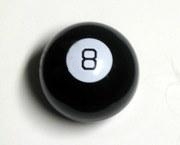
    The Magic 8-Ball approach to student questions


    "When will you give us back our papers?"

    When they are graded.


    "Will you give them back to us at the next class?"

    Cannot predict now.

    "What did you think of my paper in particular?"

    Ask again later.

    "Will we get them back before the final?"

    All signs point to yes.


    "Can I email you multiple times asking you 'what if?' scenarios about my grade and following up with demands for more calculations on your part?"

    My reply is no.


    "Will you be annoyed if I try to engage you in such an email exchange?"

    Most likely.


    "Can I ask you for an exact accounting of my grade after class when you are trying to get out of the room before the next class?"

    Don't count on it.


    "Am I going to pass this class if I don't make it to the final?"

    Better not tell you now.

    Saturday, December 03, 2011

    End of semester syndrome

    I think I have end of semester syndrome. Now, I am not a doctor, although I play one for 16 weeks each semester, but here are the symptoms:

    • A version of what Ms. Mentor calls October--"exploding head month"--in which although you've been working diligently since August, you realize that you have not accomplished nearly enough, and in your mind that becomes "nothing at all," and your head explodes with the knowledge of what you still have to do.
    • Also causing your head to explode: the realization that a whole bunch of deadlines, including MLA presentations, are zooming toward you at the speed of light.
    • A twinge of envy: assuming that all your colleagues have accomplished far more than you have in the past semester--have written more, have taught more exciting classes, and have generally outpaced you in every way.
    • Happiness that classes will soon be over. No more prep! No more grading! No more writing new assignments! No more figuring out how to teach yet one more brand-new story!
    • Sadness that classes will soon be over. You've worked really hard, and you've been with these students for all these weeks, and you're confident that at least some of them have learned something, and it's now all ending. In some way, you know you will miss the familiar routine of going in to teach them, and you will probably miss seeing some of them, too.
    • A sinking feeling upon realizing that you now have to get ready to do the whole thing all over again in the spring. You have to think about courses you've never taught before, and dream up assignments, and carry everyone along on your back with your enthusiasm until their enthusiasm for the class catches fire, assuming that it does.
    • And did I mention getting ready for the holidays?

    Symptoms may also include soundtracks. Here is the soundtrack that accompanies my particular End of Semester Syndrome; yours may vary: http://www.youtube.com/watch?v=4ruFfxlMsbY
    Am I the only patient with ESS? What are your symptoms?

    Wednesday, November 30, 2011

    No outrage, no deep thoughts--just writing

    I know it seems all tech tips and web-o-matic writing inspiration (but it does work) around here lately. The thing is, I've been spending time on the Big Project, and to do that, I have to talk to myself.

    Talking to myself is taking the form of a research journal or writing journal in which I argue with myself--"Do you want to put in that part? Why not?"--that sort of thing. I write it out, and then I answer my objections, and then eventually I go away and write. A few bullets of this week:
  • After stuffing one already published piece into this new material I'm writing, I figured out that one chapter really needed to be two. No more stuffing, and a more coherent chapter--or at least I hope so.
  • My own NaNoWriMo this month was to try to get on 750words.com every day and write something. Sometimes I'd spend all day editing and rewriting, but when evening came, I started itching to get to that clean expanse of the site and type something. If you don't write, you can't edit and make what you wrote better, and even if what came out was repetitious, it worked: the repeated version was usually better and made the editing task easier the next day.
  • Writing this way made me realize again that writing is discovery. If I was writing in the research journal file or at 750words.com, I kept thinking of things as I wrote. I know--that's an old saw about writing, but it hadn't been working as well lately.
  • The problem with writing is that academics have to read before they can write: we can't spin webs like a spider unless we have the material already packed away somewhere from someone else's words. Unlike creative writers, we're spiders with a backpack of that kind of material, and once the backpack is empty, we have to fill it back up again no matter how much we might want to write.
  • I was so committed to this that I graded all the papers, tests, etc. at the very beginning of Thanksgiving break--I even felt like doing it then--so that I wouldn't have to think about grading or classes for the whole break.

    This isn't the most exciting post, but I didn't want you think this was becoming Pogue's Posts over here.
  • Thursday, November 24, 2011

    Happy Thanksgiving! (and an iMessage tech tip)

    Giving thanks for better weather, family on the way, and a reasonably stress-free day so far. Happy Thanksgiving, everyone.

    And the tech tip: if you have an iPhone, iPad, etc. and have been trying to use iMessage (free text messaging among Apple products) without success (like thousands of other frustrated users), try adding 8.8.8.8 as a DNS server number.

    To do this:

    1. Go to Settings -> Wi-Fi -> (name of your network) and click on the blue arrow. When the screen showing the details of your network opens up, look at the line that says DNS.

    2. You will see one or more numbers that look like this: 89.87.61 (or whatever). You might have one or more than one sequence of numbers like this.

    3. Add a comma to the last number and type in 8.8.8.8 and exit the screen. Example: 123.333.33, 89.87.61, 8.8.8.8

    Some sites say to erase the old DNS numbers, but I just added this one (8.8.8.8) to the string that was there, and now iMessage works.

    http://appletoolbox.com/2011/10/ios-5-imessage-not-working-%E2%80%93-how-to-fix/

    Wednesday, November 23, 2011

    Francis Ford Coppola on writing

    http://www.npr.org/templates/transcript/transcript.php?storyId=140870590

    UNIDENTIFIED MAN #1: The question I wanted to ask is, actually, if you could talk about your writing process, your habit, sort of what's a daily writing day like for you.

    COPPOLA: Well, the thing about writing is if you really try, if you do it every day, and you put in your time, you get better. I don't know if there's a - I think with acting that's possible, too, but writing is something that if you really plug away at it, you can get better.

    The important thing is: A, choose the time that's good for you. For me, it's early morning because I wake up, and I'm fresh, and I sit in my place. I look out the window, and I have coffee, and no one's gotten up yet or called me or hurt my feelings.

    (SOUNDBITE OF LAUGHTER)

    COPPOLA: It's very important that your feelings are very, sort of, just stable. You know, you don't want to have a heartache when you're trying to go fly on some adventure of writing. At any rate, it's very important for the young writer to, when you finish the six, seven, eight pages, to turn them over and don't look at them again, because I believe there is a hormone that is injected in the blood of the young writer that makes him hate everything he has just written.

    And so just don't read it. And then when you finally have done it over the, you know, 30 days or how many days so that your stack of pages is in the 80s or something, then - and you feel you have it at some completion, then sit down and read it, and you'll find that your reaction will be very different because you will have a little distance.

    And you realize that the first 10 pages that you would have just torn up and rewritten, which is to say never go back. If you don't read it, you're not going back and rewriting anything at first, because you don't know yet. And maybe you're just going to cut those 10 pages out, and they're not even going to be in it. So you would have been rewriting something that's not even in the piece.

    So give yourself that chance to put together the, you know, 80, 90 pages of a draft and then read it very, at a - you know, in a nice little ceremony, where you're comfortable, and you read it and make good notes on it, what you liked, what touched you, what moved you, what's a possible way, and then you go about on a rewrite.

    And I'll rewrite a script a trillion times. So rewriting is just the middle name of writing.

    [Note: Coppola wrote the script for Patton, for which he won an Oscar, when he was 24 years old.]

    Monday, November 21, 2011

    A "keep your chin up" post, comfort food edition

    If you read the news, it's easy to get discouraged. On the national side of things, this means one party trying to "Kill the Poor" and heap benefits on the rich beyond all reason, with some candidates so venal that they make Richard Nixon look good. On the university side, it means the events at Penn State and the police attack on students at U C Davis. Last year was the 40th anniversary of the shootings at Kent State. I hope we're not headed back in that direction.

    So, to keep my chin up, and yours, I'm going to offer you some comfort food: a recipe for cranberry-apple cobbler (or apple brown betty, apple crisp, or apple crumble--name varies regionally).

    1. First, get out your apple corer, if you have one (they are fabulous devices) and peel and core about 5-6 reasonably tart apples: McIntosh, Cortland, Honey Crisp, Wealthy, Northern Spy, or Granny Smith. Use all the same kind of apple, though; the cobbler will taste better. If you use sweeter varieties than these, use some lemon juice put the juice of 1/2 to 1 lemon in the recipe, depending on the sweetness of the apples.

    Cut the cored and sliced apples in quarters so that the slices are small.

    2. Preheat the oven to about 400 degrees and get out a pan, the size you'd use for brownies or a one-layer cake--about 8 x 11." Butter the pan.

    3. Put the apples in the pan along with about a cup of fresh cranberries. Combine 1 c. sugar and 1 tsp. cinnamon in a bowl and pour it over the apples and cranberries. Toss this together with the fruit so everything is coated with the cinnamon-sugar mixture.

    4. In another bowl, cut together with a pastry cutter or knives: 1 stick (i.e., 1/2 cup) of butter, 2/3 c. brown sugar, 2/3 c. rolled oats, 1/3 c. flour.

    5. Spread this crumble mixture over the top of the apples and bake for about 35 minutes, until the fruit bubbles along the sides and the top is browned.

    This is good served warm with ice cream and also just by itself.

    There, don't you feel better now? It sure helped me.

    Wednesday, November 16, 2011

    Deep silliness at the Chronicle: banning all but ebooks


    Just in time for a little Thanksgiving levity, The Chronicle publishes an article so deeply silly that it'll do your heart good: "In the 21st-Century University, Let's Ban (Paper) Books". The credits line lists some books that the author has written, including one on our old friend the "digital native," but I'm having a hard time believing that he's ever read any.

    First of all, the "digital natives" will have to be "weaned" off physical books, because . . . well, because otherwise how will this guy make any money? they won't be being all modern and 21st century and such. I always thought if technology made life easier, students would use it, because they're rational beings. But if they use physical books because books serve their purposes better? Now, that's just wicked stubborn, and those books have to be taken away, like pacifiers, for their own good.

    Leaving aside the issue of paper versus e-form, what about content? Don't worry:
    Much of what students need to study is already in the public domain and can easily, in instances where it hasn't already been done, be converted to electronic form. Most contemporary works exist electronically, as do a huge number of historical books and documents. This would be an incentive to scan more of them.
    So copyright is no problem? These books are free? "Much" is in the public domain? Well, all right, then! Just point me to the planet where this is true, please.

    What about our books? No worries there, either: "Professors would have a limited time in which to convert their personal libraries to all-digital formats, using student helpers who would also record the professors' marginal notes." I love this--"limited time." What happens then? Does Oskar Werner come in and incinerate the rest after the "limited time"? Has this person ever worked at a university where even getting the TPS reports in on time is a major challenge and subject to faculty complaints? Oh, and who's paying for all these student helpers and scanning? Universities in the grip of, in Roxie's phrase, "Excellence Without Money"?

    Just in case you haven't got the point yet, there's a rousing scolding waiting for you in the conclusion:
    The idea of having one's own personal library of physical books, so useful in earlier times, is no longer worth passing on to our students. ...Academics, researchers, and particularly teachers need to move to the tools of the future. Artifacts belong in museums, not in our institutions of higher learning.
    I could tell you what I'd write on a student paper that used (1) sweeping generalizations, (2) illogical leaps of reasoning, (3) irrational and pointless abuse of a perfectly reasonable technology--paper--as "old" and useless, and (4) a complete lack of evidence for the conclusions, but I guess I'd better get busy scanning my notes while I still can.

    Saturday, November 12, 2011

    Cast a cold eye

    While I admire what Historiann's doing with her roundup of "What's the matter with higher education?" posts in response to Anthony Grafton's piece, I just don't have anything useful to contribute and so will look forward to the posts. Roxie, Notorious Ph.D., Dr. Crazy, and others already have some great posts up in response, and there'll be more.

    My short take would be that it's a resources divide: being starved of money is forcing public and private universities to face compromising either their educational mission or their existence as an institution. It's a mirroring of the gap between the 99% and the 1% all over again. I'm especially struck by this:
    Americans, as Malcolm Harris recently pointed out, now owe almost a trillion dollars in student loans, more than they owe in credit card debt. Student debt, he explained, “is an exceptionally punishing kind to have. Not only is it inescapable through bankruptcy, but student loans have no expiration date and collectors can garnish wages, social security payments, and even unemployment benefits.” The burden is distributed by the reverse of the Matthew principle: to him who hath not, no one gives anything.
    . As one student with $200,000 in student debt put it in the New York Times not long ago, it's like graduating with a house on your back, but a house that you can't live in. If you marry, you saddle the person you love with this debt. You put your life on hold to pay it back, which may be never on the wages you can earn. There's something profoundly wrong with this system.

    So. In other news, and to push down the previous post, today's the day I cast a cold eye on all I've written so far on the big project to see where everything is going, if it is indeed going at all. When I started this post, that's what I thought I was casting the cold eye on, but now I see it's not the only thing that needs scrutiny.

    Friday, November 11, 2011

    Short link post on Penn State news

    Update 11.22.11:Huffington Post today reports that the mother of Victim 1 (see story below) was dissuaded from reporting by

    The principal of the school, Karen Probst, a woman.
    The school counselor, also a woman.

    Mother 1 wanted to call the police immediately, and that's when she was given the "Mr. Heart of Gold" speech. By the principal. And the counselor. Two women.

    It's not about gender here. Protecting power is about protecting power.

    http://www.huffingtonpost.com/2011/11/22/penn-state-scandal-jerry-sandusky-victim-mother_n_1108979.html?page=2
    ........

    I am horrified, like everyone else, about the sexual abuse news from Penn State. And can we PLEASE stop calling it a "sex scandal"? "Scandal" implies some sort of delicious gossip about celebrities; this is just horrifying. And "sex" implies consent. This was not "sex" with consent but the rape of children. Go read these powerful posts right now:
    One message is pretty clear, and it's an old message: Power consolidates and protects itself, even at the risk of missing a heinous crime; and those who want to challenge that culture are dissuaded from doing so, sometimes forcefully and sometimes by a more subtle degree of intimidation. Buried deep in one article about the courageous boy and his mother who came forward is this:
    Increasingly worried about the boy's behavior, including his reaction to the phone calls from Sandusky, Gillum said the victim's mother asked school officials to help identify the problem. Gillum said the boy eventually told a school official that "there was an issue" with Sandusky, although the boy declined to elaborate.Gillum said a school official relayed the information to the boy's mother in a meeting.

    The official, who Gillum declined to identify, then reminded the mother of Sandusky's solid reputation in the community. The psychologist said the official characterized Sandusky as having "a heart of gold."

    The mother told the psychologist that the official advised her to think about the situation for a few days before taking any action.

    "She was angry," Gillum said. "She was upset about that and felt that she was being dissuaded" from taking action. The mother did not respond to a request for an interview.
    She felt she was being dissuaded because she was being dissuaded. The message there was clear: "He has power; you have none. He is important; you and your son are not. Are you sure that you want to bring down the @#$%^storm of misery that reporting is going to bring with it? Because, trust me, it's going to hurt you more than it's going to hurt Mr. Heart of Gold."
    It's all part of the culture of silence that allows predators to continue their activities.

    Saturday, November 05, 2011

    Grading Papers on the iPad Redux

    (Go here for the original post.)

    Here's an update, part experiential and part technical. The technical part is here because I hate it when people rhapsodize about doing something on the iPad that you know from experience is tricky to do and then don't tell you how it's done.

    The experience: grading on the iPad now doesn't take longer (or much longer), and it's fun. [Update: It now doesn't take any longer, although it would if I were including long explanations of errors as is possible with autotext.]

    Experience update

    Pro:
    1. I invested in a wireless keyboard, which makes the whole typing on the iPad thing much easier and with many fewer typos.
    2. I like reading the papers on the iPad. It seems to be easier to get a sense of the big picture of the paper, since the .pdf conversion usually changes double space to single space.
    3. I didn't time the papers this time, as I did before, but the cumbersome features that made the process longer last March have largely been eliminated.

    Con:
    1. There's still no Autotext feature. That means that students have to rely on their handbooks or other aids to look up what may be wrong with a sentence, since I am certainly not going to type out 5 sentences on what a comma splice is every time they write one. On the other hand, we've already talked about these things in class and this isn't their first paper, so perhaps it won't be a problem.
    2. There's still a few more transfer/downloading/renaming steps than if I were using Word.

    Technical

    Importing the papers

    First of all, it's not necessary to change the papers (which are usually in Word or some variation) to .pdf using a third-party program. iAnnotate will do that if you open them correctly.

    Do NOT try to open them directly in iAnnotate unless they're already in .pdf format; they won't show up.

    1. Open Dropbox. Go to the folder where you've stored the student papers.
    2. Touch (click on) the paper to open it. It'll show up in the Dropbox window, but tell it to "Open in" iAnnotate. Click on the box with the arrow in the upper right-hand corner to do this. You may have to scroll down to see iAnnotate as an option when the menu for this box opens up.
    3. iAnnotate will convert the file to .pdf and then open it.

    Marking Up the Papers

    Second, write your comments using iAnnotate's commenting features. I don't draw freehand lines and circles, since it's slower for me than just inserting comments, but it's possible to do that.

    Update: In addition to using the commenting features, I now mark directly on the .pdf with a stylus. I don't do much with the stylus--circle a few words, add a "good point" in the margins--but the paper looks a little more as though it has been touched with human hands if there's handwriting on it. It's also a more immediate and "natural" way to respond it you're used to writing on paper.

    1. To insert a comment, tap on the pencil icon at the side of the screen and tap on Note. You'll then have two choices: Note and Typewriter. Choose Note.
    2. Type your comments in the Note space just as you would do with the Word comment feature. [Thanks to Stacey for bringing that up.] It works exactly the same.
    3. Click on the minus sign to close the note when you're finished typing.
    4. I used to use Typewriter for a final comment, but it shows up as a big black oblong with no text in some readers (like Adobe Acrobat). The Notes, on the other hand, seem to show up fine in Adobe, which is probably what most students have installed.

    The Notes will show up in most desktop readers (including Adobe and Preview for Mac) and in iAnnotate but not in Goodreader, NoteTaker, CloudReaders, and other readers for the iPad. You can also "flatten" the annotations so that they'll be more readable. If you "flatten" the annotations, they will show up as a numbered list of comments at the bottom of the page instead of a pop-up message that shows up when students mouse over the comment.

    Return the papers

    Third, either re-upload the paper to Dropbox or email it to the student. You can email it by clicking on the box, which is on the left side.

    But what if you want to re-upload it to Dropbox so that you can later upload the papers to a CMS? This is not an intuitive move in iAnnotate.
    • File cabinet icon? No.
    • Upload arrow? No. It will tell you that the file has been uploaded to Dropbox, but the file doesn't upload.
    You would never guess this one (or at least I couldn't after many attempts), but here's what I found from drilling down on the iAnnotate support site:

    1. Click on the file folder-like tab at the top of the document (the Document Context Menu).
    2. Click on Share.
    3. Click on Upload.
    4. Now you'll see your Dropbox account. Click on it and your file will upload.
    5. Note: It will probably upload to the iAnnotate folder rather than to the folder from which you downloaded it.

    You'll still be stuck with the same filename, since the Gods of Apple Products have an insane prejudice against a Save As feature, but at least you'll have them all where you can rename them and upload them to your CMS or whatever.

    Wednesday, November 02, 2011

    Questions that don't need an answer

    • "Hey, Professor Lastname, can I write my paper on this very specific topic using two books that are not only not in our course but not from the same century or country as the literature we're studying?"
    • Do you think that this student just might have an already-written paper from another course that ze wants to turn in for this assignment?
    • "I don't have your papers to turn back to you today; I haven't graded them." Student: "Yes, but have you had a chance to look at mine?"

    Saturday, October 29, 2011

    The banking model of course prep: in person and online

    One of my courses is new this semester, so despite all the advice that people have been getting (see Profacero's post, for example, or the comments in the Another Damned Notorious Writing Group threads) about not spending any time on course prep but saving time for writing, unless you want to go into a classroom with egg on your face, you have to do something.

    This is the reason for spending a writing day the other day dreaming up assignments and exercises for this and the other courses. The downside: losing a day of writing. The upside: now these things are done, and I don't plan to revisit them. If you've taught for years, you know what works and what doesn't, and if you make a mistake and write a bad part of an assignment, you adjust your expectations and fix it the next time.

    What keeps me going, though, is the back-of-the-mind metaphor that now that I've done this course once, I never have to do it again. It's in the bank, so to speak. Realistically, a course is never really done; you think of what could be done differently or better the next time you teach it. Still, you don't have to invent every single thing from scratch, the way you do with a new course, and it's unlikely that you'll need to (although I would) share materials with others who teach the course in later semesters. It becomes your course, and you are identified with it--for this moment, anyway--whether it succeeds or it doesn't.

    In an online course, you're still working with a banking model, but the push from higher-ups is different. In effect, if the course has been taught by someone else before, there's a strong pressure for you not to change anything--assignments, readings, syllabus--and to use what has been done before. Instead of making deposits, you're supposed to withdraw from the account that someone else has established.

    Now, in theory, this would be a huge timesaver, since you don't have to put all that time into creating new assignments and could spend it on writing. But if you are stubbornly perverse about teaching your own material, as I am, and if you see ways to improve the course, as I did, you ignore the pressure and design the course the way you want it. The difference is that this time, you're banking the course not on your own computer but on the university's server, and if you don't keep extra copies of the materials on your own computer, all your work could be lost if everyone else doesn't want to teach your course the way you designed it (and why should they?). You've banked it, but you don't own it. If it stays, it's not really associated with you as a teacher, and it can disappear.

    We don't really "own" courses, of course, and all that banking imagery just makes the loss of time for other work easier to justify. It's just a different feeling. In one, I'm putting aside material that I can draw on later, and it has my name on it. In the other, I'm developing material anonymously for a collective pool of materials. Both have their advantages, but I'm struck by how different they seem.